
Key Takeaways
- The first 24-48 hours after storm damage determine whether moisture spreads into structural cavities or stays contained to visible surfaces; a delayed response turns a localized repair into a full remediation project.
- Insurance professionals warn that home insurance typically does not cover flood damage, which is separate from other storm-related damages (AP News).
- Professional assessment measures moisture levels behind walls and under flooring, not just what you can see. Surface drying without structural monitoring leaves hidden damage that compounds over weeks.
- Response time matters more than equipment alone: arriving within 90 minutes means extracting water before it migrates through drywall seams and subfloor joints.
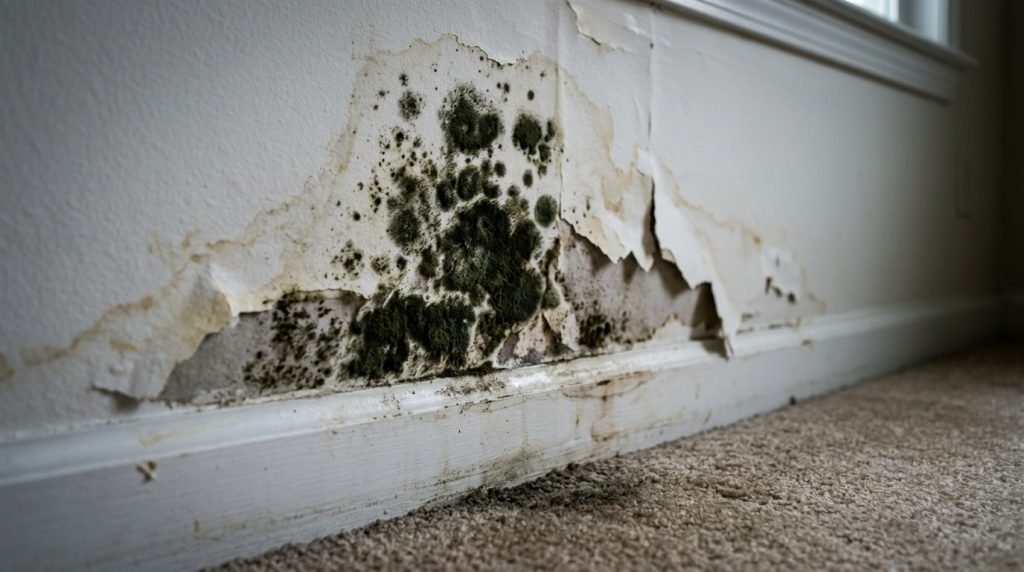
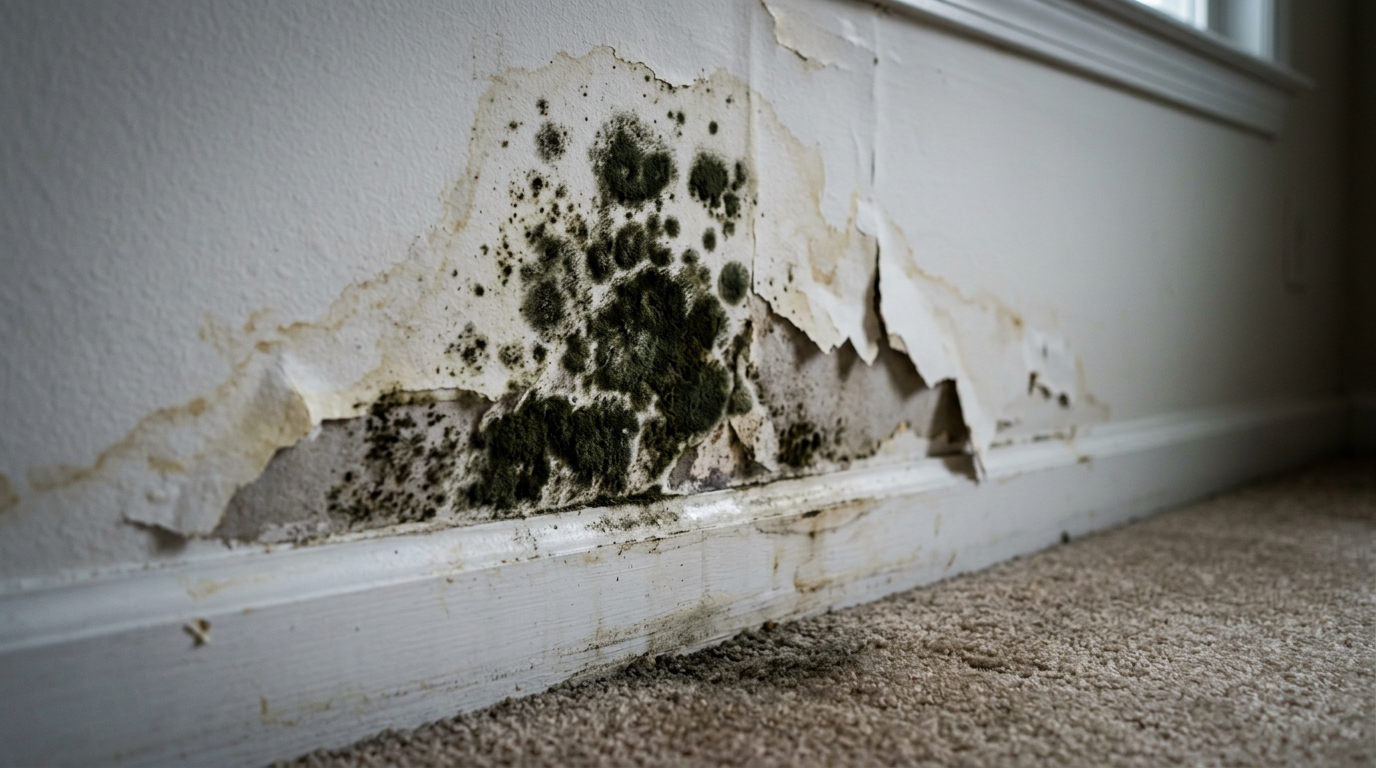
The window to prevent secondary damage closes faster than most homeowners expect. What looks like a manageable roof leak or flooded basement on day one becomes a mold remediation project by day three if moisture reaches the wall cavities.
How timing affects storm damage recovery outcomes
Water moves through building materials in predictable patterns. Drywall wicks moisture vertically at roughly one inch per hour. Subfloors absorb standing water within the first six hours, and once saturation reaches the joists, structural drying takes days instead of hours. The most common mistake Charlotte homeowners make in those first few hours is treating stormwater like ordinary rainwater, mopping up the surface and assuming that’s the end of it. The 30-90 minute response window exists because extraction equipment works best on surface water. After four hours, water has migrated into porous materials where fans and dehumidifiers become the only option, and those take much longer to pull moisture out than a truck-mounted extractor does from wet carpet. Mold spores begin colonizing within 24-48 hours in the right conditions. A delayed response means more water damage and a biological hazard on top of structural repairs. The cost difference between immediate extraction and a week-later remediation often doubles, not because contractors charge more for mold work, but because the scope expands from drying to removal and reconstruction. When a storm hits at night and you’re deciding whether to call now or wait until morning, remember that every hour of standing water adds another layer of material that needs attention. The ceiling stain you see rarely shows the full extent; it’s the visible edge of moisture that has already spread through insulation and framing.
What to expect during the storm damage assessment process
You walk through your home pointing at the wet spots. A thorough assessment ignores what you’re pointing at and measures what you can’t see. Moisture meters read the water content inside walls without cutting them open. Infrared cameras map temperature differentials that indicate where water has traveled behind surfaces. On a recent storm call, a homeowner assumed that water which had entered under a back door was limited to the living room surface after they mopped it up, but thermal imaging and moisture meters revealed elevated moisture that had wicked under the baseboards into adjacent wall cavities and the subfloor, areas that looked completely dry to the naked eye. Without that assessment, the hidden moisture would have led to mold within days. A professional assessment documents moisture levels in at least a dozen locations, not just the obvious wet areas but adjacent walls, the floor below, and the ceiling above. The assessment produces a moisture map. Readings above 15-17% in wood framing mean active water intrusion that requires drying equipment. Readings below 12% are baseline dry. Anything in between gets monitored daily because it can go either way depending on airflow and humidity. This process takes 45-90 minutes for a typical residential property, longer for commercial spaces with multiple floors or complex HVAC systems. The goal is to identify every surface that needs drying before equipment is placed, because missing a wet cavity means you’ll be back in two weeks cutting out moldy drywall. Most homeowners expect a quick visual check and an estimate. What they get is a room-by-room documentation of moisture content, airflow restrictions, and structural access points. The difference between a surface assessment and a thorough one is whether you’re addressing the problem or just the symptom.
The role of insurance in storm damage restoration
Your homeowner’s policy covers wind damage to your roof and the water that comes through the hole. It does not cover the flood that came in through your basement window when the storm surge hit. Insurance professionals warn that home insurance typically does not cover flood damage, which is separate from other storm-related damages (AP News). This distinction matters immediately after a storm. If water entered through a roof or window failure caused by wind, that’s covered. If it came up through the foundation because the ground was saturated, that requires separate flood insurance most homeowners don’t carry. Deductibles apply per event, and “event” can be interpreted narrowly. A storm that causes roof damage on Tuesday and basement flooding on Wednesday might be one event or two, depending on how your policy defines it. Direct insurance coordination means the restoration company documents damage in the language your adjuster needs: moisture readings, material categories, and scope of loss, rather than leaving you to translate a contractor’s estimate into insurance terms. The claims process moves faster when initial documentation is thorough. An adjuster who sees detailed moisture maps and equipment placement logs can approve the scope without a second site visit. Missing that documentation means delays while they schedule another inspection, and every delay extends the drying timeline.
Common misconceptions about DIY storm damage repairs
Renting a few fans and opening windows feels like progress. It’s also how you end up with mold growth in wall cavities three weeks later. Surface drying and structural drying are different processes. Fans move air across wet carpet and drywall, which helps if the moisture is only in those surface materials. But if water has reached the subfloor or the insulation, you need negative air pressure to pull moisture out of enclosed spaces. A box fan sitting in the middle of the room doesn’t create that. Homeowners who attempt their own mold remediation usually make it worse. Mold spreads through spores, and disturbing a colony without containment releases those spores throughout the house. Proper remediation means sealing the affected area with plastic sheeting, running negative air machines with HEPA filters, and removing contaminated materials in a way that doesn’t cross-contaminate clean spaces. The bigger risk is structural repairs without understanding load paths. Cutting out water-damaged drywall is straightforward. Cutting out a water-damaged floor joist without temporarily supporting the load above it is how floors sag. Storm damage often affects structural members, roof trusses, wall studs, and floor joists, and repairing those requires knowing which ones you can remove and which ones are holding the building up. DIY makes sense for truly minor damage: a small roof leak that wet one section of drywall and nothing else, caught within hours. Anything that involves standing water, multiple rooms, or signs of moisture in hidden spaces is beyond what a homeowner can address with rental equipment.
Key factors to consider when choosing a storm damage mitigation strategy
Response time is the first filter. If a company can’t commit to arriving within 90 minutes of your call, they’re not set up for emergency work. Storm damage doesn’t wait for business hours, and neither should your response team. Certification matters because it indicates training in specific protocols. IICRC certification means the technicians follow standardized procedures for water extraction, structural drying, and microbial remediation. It’s not a guarantee of quality, but it’s a baseline that separates trained professionals from general contractors who occasionally handle water damage. Equipment capacity determines how quickly a space dries. A company that shows up with two dehumidifiers and a handful of fans will take twice as long as one that brings truck-mounted extractors and commercial air movers. Deploying water extraction equipment within the first 90 minutes to pull standing water out fast makes the biggest difference in preventing secondary damage. Ask what equipment they’ll deploy on day one, not what they own in their warehouse. Insurance coordination should be direct. You want a company that documents damage in the format your insurance adjuster expects and communicates with them throughout the process. If the restoration company hands you an estimate and tells you to submit it yourself, you’re now the intermediary translating between two parties who speak different languages. Check whether they handle both mitigation and reconstruction. Some companies only do emergency water extraction and drying, then hand you off to a separate contractor for repairs. Others manage the full process from extraction through rebuilding. Neither approach is inherently better; it depends on whether you want one point of contact or prefer to hire your own contractor for repairs once the space is dry.
What should I do immediately after storm damage occurs?
Stop additional water from entering if you can do so safely. Cover a roof hole with a tarp or close a broken window with plywood. Document everything with photos before moving or removing anything. Call your insurance company to open a claim, and call a restoration company with 24/7 emergency response. Do not wait until morning if the damage happens at night; water migration accelerates in the first few hours.
How long does the storm damage restoration process typically take?
Water extraction and initial drying take 3-5 days for most residential properties, longer if moisture has reached structural cavities or if humidity levels are high. Full restoration, including repairs and reconstruction, can take 2-4 weeks depending on the extent of damage and material availability. Commercial properties often take longer due to size and complexity. The timeline extends significantly if mold remediation becomes necessary.
What are the costs associated with storm damage recovery?
Costs depend on the extent of damage, the materials affected, and how quickly response begins. Water extraction and drying for a single room typically run lower than full-structure drying with reconstruction. Mold remediation adds substantial cost because it requires containment, specialized equipment, and material removal. Your insurance deductible applies first, then coverage kicks in for eligible damage. Get a detailed scope of work before equipment is placed so you understand what’s covered and what’s out-of-pocket.
When is it appropriate to file an insurance claim for storm damage?
File immediately after discovering damage, even if you’re unsure about the extent. Your policy requires prompt notification, and delaying the claim can complicate coverage. The adjuster will determine what’s covered; your job is to document and report. Small cosmetic damage that costs less than your deductible might not be worth claiming, but anything involving water intrusion, structural damage, or potential mold growth should be reported. The insurance company decides coverage; you decide whether to proceed once you know what they’ll pay.
What signs indicate that professional help is needed for storm damage?
Standing water covering more than a small area, water that has been present for more than a few hours, visible moisture on walls or ceilings, musty odors developing within days of the storm, and any damage to structural components like roof trusses or floor joists all require professional assessment. If you’re uncertain whether water has reached hidden spaces behind walls or under flooring, that uncertainty itself is reason enough to call for an evaluation. Moisture meters and thermal imaging reveal problems you can’t see.
What happens after you make the call
The decision isn’t whether to hire someone; it’s whether to act while the damage is still containable. The difference between a manageable repair and a multi-week reconstruction project often comes down to the first 24 hours. If you’re facing storm damage with water intrusion, roof failure, or signs of moisture in structural spaces, Statewide Restoration handles emergency water extraction and can assess the full scope before secondary damage spreads.