
Key Takeaways
- Mold doesn’t need standing water to start growing; it needs moisture, and porous materials like drywall and subfloor can hold enough water to support growth well beyond the 24 to 48 hours it takes spores to activate.
- A remediation scope should be built from moisture readings inside walls and floors, not from how much mold is visible on the surface.
- Non-porous materials can often be cleaned and dried in place; porous materials that absorb water past a certain point usually have to be removed, not just dried.
- The right question isn’t “how much mold is there,” it’s “how long was this material wet, and what is it made of.”
Most mold problems are not caused by the water you can see. They are caused by the water that has already soaked into drywall and subfloor before anyone arrives. Mold remediation scope is determined by how long a material stayed wet and what it’s made of, not by the square footage of visible growth.
Why mold appears days after the water is gone
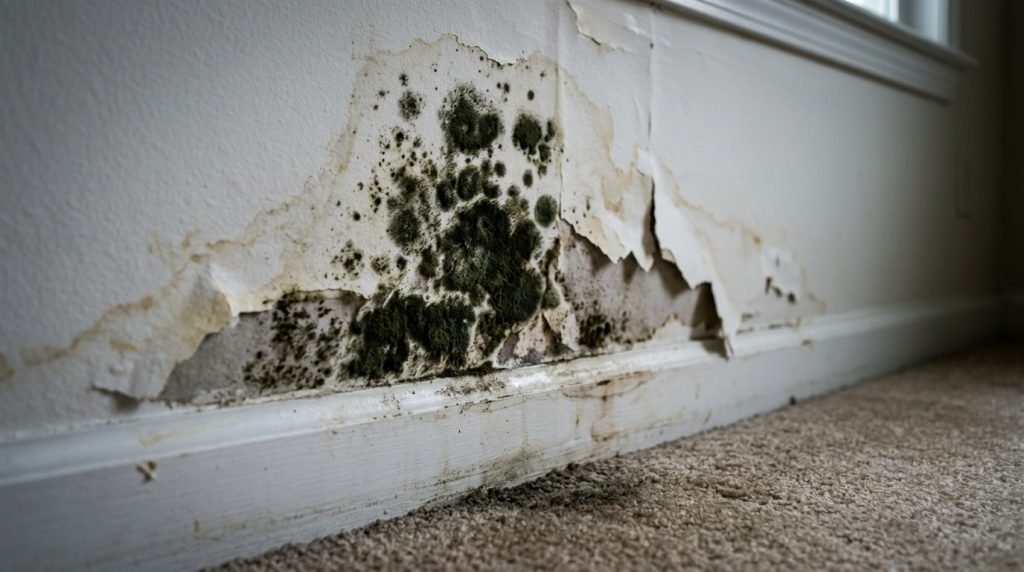
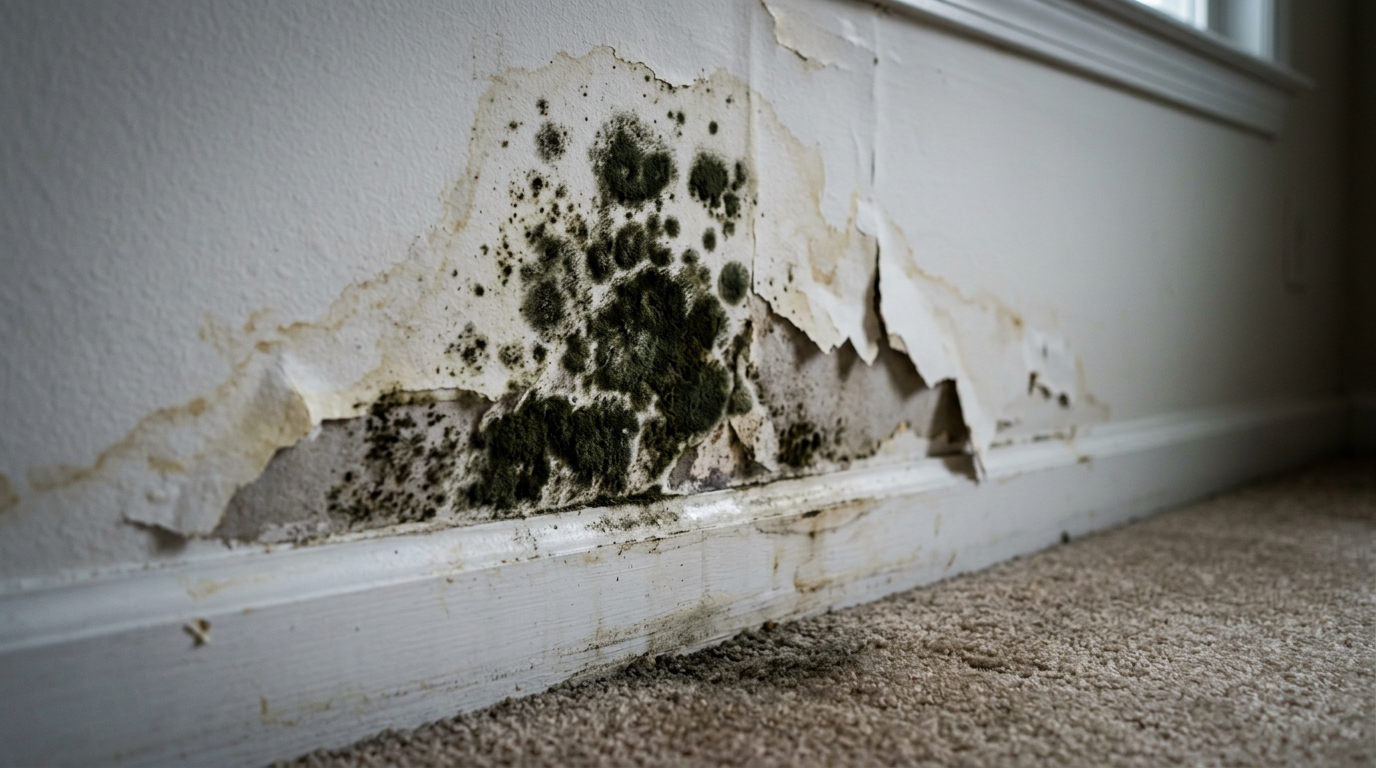
Mold doesn’t wait for standing water. It waits for moisture, and those are not the same thing. Once a pipe stops leaking or a puddle gets mopped up, most people assume the danger has passed. It hasn’t. Drywall, subfloor, insulation, and wood framing are porous. They absorb water and hold it long after the surface looks dry. According to the CDC, excess moisture is the major cause of indoor mold growth, not standing water itself. In Charlotte’s humidity, a wall cavity that stayed wet for even a day can sit at an internal moisture level that supports mold colonization for 72 hours or more after the leak is fixed. That’s the gap where a homeowner thinks the problem is solved and a mold colony is actually just getting started, unseen, behind the baseboard.
Moisture readings, not visible damage, set the remediation scope
A technician walks into a basement after a supply line leak, and the visible damage is a stained patch of drywall about the size of a dinner plate. That’s not what determines the scope. The technician’s next move is to press a moisture meter against the wall in a grid pattern, six inches apart, working outward from the stain until the readings drop back to normal. That visible stain is often deceptive. On one job the surface stain measured only about six inches, but moisture readings showed saturation spreading across a four-foot span and wicking three feet up inside the wall cavity. The stain only marked where moisture broke through to the surface, not how far it had actually traveled behind the wall. The visible patch tells you where to start looking, not where the job ends.
Material type and wet duration decide whether drying is enough or removal is required
The instinct with any mold is to assume it all has to come out. That’s wrong more often than it’s right. What decides the outcome is the material and how long it stayed wet, not how much mold is visible.
| Material type | Wet under 24-48 hrs | Wet 72+ hrs or visibly colonized |
|---|---|---|
| Non-porous (tile, glass, sealed metal, hard plastic) | Clean and dry in place | Clean and dry in place |
| Semi-porous (finished wood, concrete) | Clean and dry in place | Often salvageable with deeper cleaning |
| Porous (drywall, carpet padding, insulation, subfloor) | May be salvageable if dried fast | Usually requires removal |
The NIH’s mold remediation guidance makes the same point from another angle: moisture control is the key to mold prevention, which means the material’s ability to hold or shed that moisture is what should drive the decision, not a visual estimate of square footage. A sealed concrete floor that got wet for a day can usually be cleaned and dried. A soaked piece of drywall behind it, sitting at the same square footage, usually can’t be saved. Choose removal when the material is porous and the wet period ran past about two days; choose in-place cleaning when the surface is sealed or the exposure was brief and caught early. One job stands out: a crew was mid-replacement on a window when a heavy rain moved in faster than they could get it covered. Statewide Restoration came in the same day, set up floor mats, dehumidifiers, and fans, and was able to dry the space in place without removing any material. The scope should match the moisture reading, not the other way around.
Four questions that separate an honest scope from a guess
Not every quote covering “mold remediation” is quoting the same work. Before agreeing to a scope, ask:
- What moisture readings were taken, and where? A number for the affected wall and a number for the surrounding studs and floor, not just a visual estimate.
- What’s included in containment? Physical barriers and negative air pressure to keep spores from spreading to unaffected rooms during removal, not just a tarp over the work area.
- How will clearance be confirmed when the job is done? According to EPA guidance, finishing remediation is ultimately a judgment call based on whether people can occupy the space without symptoms, so ask what that judgment is based on, visual inspection, moisture readings, or both.
- Does the scope explain why each material is being removed versus dried? A scope that just lists “remove drywall” without a moisture reading behind it is a guess, not a measurement.
Most homeowners are surprised to learn that the scope boundary isn’t drawn at the visible stain or wet spot. It’s set by moisture readings that often extend well past what looks damaged, following IICRC S500 drying standards. That’s why a small stain can turn into a much larger cut line than expected, and why work that looks excessive is often just following the standard. A scope that can’t answer them clearly is built on assumption, not data.
Frequently asked questions
How much does mold remediation cost for a small office?
Cost depends on how many square feet tested wet, what materials are affected (porous materials cost more to remove and replace than non-porous ones), and whether HVAC ductwork is involved. A firm number comes only after moisture mapping identifies the actual extent, since visible mold is frequently a fraction of the affected area.
Does homeowners insurance cover mold remediation after a sudden leak?
Often yes, when the mold is a direct result of a sudden, covered event like a burst pipe, provided the claim is filed and remediation starts promptly. Coverage typically narrows or disappears if the moisture sat unaddressed for an extended period, since that shifts the cause toward maintenance rather than a sudden loss.
Can I stay in my home or rental unit during mold remediation?
It depends on containment and location. Small, contained jobs in a single room with proper containment barriers often allow the rest of the unit to remain occupied. Larger jobs involving HVAC systems, common walls, or extensive porous material removal usually require temporary relocation until clearance is confirmed.
When does insurance typically deny a mold remediation claim?
Coverage typically excludes mold linked to long-term humidity, plumbing leaks left unrepaired, or poor maintenance, since insurers treat those as preventable conditions rather than sudden losses. If moisture sat for weeks before anyone addressed it, expect the insurer to push back on the claim regardless of how the mold itself formed.
Where to go from here
Before calling anyone, figure out how long the affected material was wet and what it’s made of. Those two facts, not the size of the visible stain, are what actually determine whether you’re looking at a same-day drying job or a multi-day removal project. If a leak in your home or business has already soaked drywall, subfloor, or insulation for more than a day, Statewide Restoration’s IICRC-certified technicians can take moisture readings before any material gets removed, so the scope is based on what’s actually wet rather than what’s visible.