
Key Takeaways
- A dinner-plate-sized mold patch on drywall can mean the entire wall cavity behind it is colonized, because mold spreads through porous materials from the inside out, not just across the visible surface.
- Surface testing tells you what species is growing on one spot; air sampling tells you how much is actually in the air you’re breathing, and a basement or rental problem usually needs the second one.
- Materials that stayed wet for 24 to 48 hours are already past the general threshold where colonization risk rises sharply, regardless of how clean the wall looks once it dries.
- Ambient room humidity readings tell you almost nothing about what’s happening inside a wall cavity; that requires a separate moisture check.
- A clearance test confirms conditions have returned to a normal range for the property, not that every spore has been eliminated.
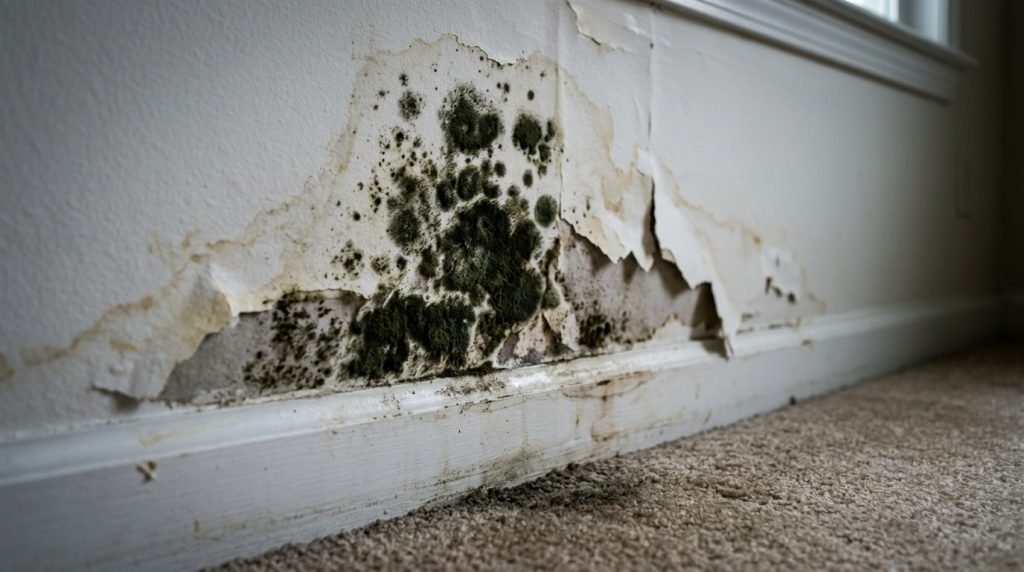
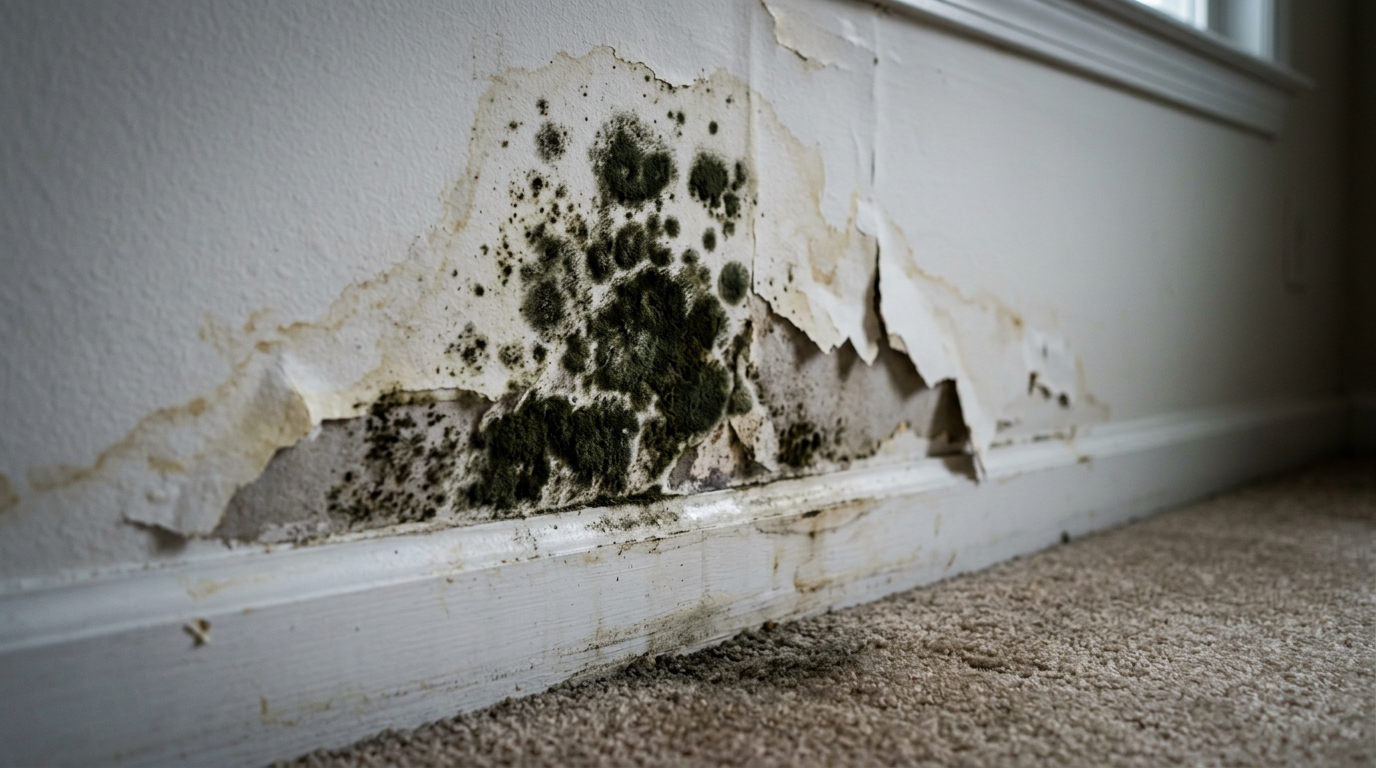
A patch of mold the size of a dinner plate can mean a wall cavity that’s completely colonized behind it. The visible spot is the symptom, not the map of the problem. Mold hides inside porous building materials, extending well beyond whatever patch is visible on the surface. That gap between what you can see and what’s actually growing is where most mold decisions go wrong. Homeowners in a finished basement and landlords clearing out a rental unit both make the same mistake: they treat the visible patch as the whole story, wipe it down or cut it out, and call the job done. The five signs below separate a contained, surface-level spot from a colony that’s already spread past what anyone can see without opening the wall.
A small visible patch can signal a much larger hidden colony
Mold doesn’t grow like a stain spreading outward on a flat surface. It colonizes porous materials, drywall paper, insulation, subfloor, from the inside out, feeding on the material itself wherever moisture and organic matter meet. The mold you can see on the painted face of a wall is often just the part that broke through to open air. Behind it, spores travel through wall cavities and along HVAC pathways, especially when moisture sat unnoticed for days before anyone spotted a stain or smelled anything. This is why a “small” mold problem and a large one can look identical from six feet away. A patch behind a couch in a finished basement, fed by a slow foundation seep nobody checked for months, has had far more time and far more hidden material to colonize than a patch caused by a leak caught and dried within a day. On one job, a call for what looked like a minor mold spot turned into a major water damage project once the crew discovered a condensating HVAC system had been feeding moisture into the space for far longer than anyone realized. Size on the surface tells you almost nothing about size inside the cavity. The only way to know the difference is to open the wall at a few points or test the air behind it.
Air sampling detects hidden growth that surface testing misses
A visual inspection and a mold test are not the same thing. Surface (or tape) testing swabs or tapes a specific spot and identifies what species is growing there. Air sampling measures how many spores are suspended in the air of a room, which determines whether the space is currently generating a health-relevant exposure. For a basement or rental unit where growth may be happening behind a wall, air sampling is usually more useful, because it can pick up elevated spore counts even when there’s no visible patch in that room at all. The standard tool for this is a Zefon Air-O-Cell spore trap cassette run on a calibrated pump at 15 liters per minute. Surface testing can’t do that; it only tells you about the exact spot you swabbed.
| Surface/tape testing | Air sampling | |
|---|---|---|
| What it measures | Species present at one spot | Spore concentration in room air |
| Useful for | Confirming what a visible patch is | Detecting hidden or diffuse growth |
| Blind spot | Says nothing about air quality or hidden growth elsewhere | Doesn’t identify the exact hidden source location |
A visible patch with no air sampling can look “handled” on paper while the room’s air quality is still elevated from growth nobody has located yet.
Four checks before assuming a leak or rental unit is actually resolved
Once the puddle is gone and the wall looks dry, it’s tempting to call the problem over. Before accepting that, check these:
- Relative humidity inside the wall cavity, not just the ambient room reading. A room can read normal on a hallway humidity gauge while the cavity behind the baseboard is still saturated.
- Whether the actual moisture source was stopped, versus just the visible water being wiped up or a fan run over the surface. A slow pipe fitting or a foundation crack that wasn’t repaired will keep feeding growth even after the floor looks dry.
- How long materials stayed wet before drying started. Saturation lasting 24 to 48 hours is the general threshold where mold colonization risk rises sharply; a delayed response of even a day or two changes the calculation.
- Whether drying was measured or just assumed. “It felt dry to the touch” is not the same as a moisture meter reading inside the affected material.
On a small, fresh spill caught within hours and dried with a fan and open windows the same day, a homeowner handling it themselves without professional testing is often reasonable. The biggest misjudgment homeowners make is assuming that once the visible mold is gone, the problem is solved. Bleach or surface wiping usually leaves growth inside porous materials, and dead spores are still allergenic, which is why the IICRC S520 standard calls for mold to be physically removed and the moisture source fixed, then verified with post-remediation testing rather than simply made to disappear from view. Air sampling and cavity-level moisture checks earn their cost mainly when the moisture sat unaddressed for more than a day, when the affected area is inside a wall or under flooring rather than in open air, or when the property is a rental where a landlord’s quick fix needs independent verification before a tenant accepts it as resolved. Odor is also a signal worth trusting. According to health.ny.gov, a musty smell is often the first indication of a mold problem, and following that odor to its source is one of the most reliable ways to find growth that isn’t visible yet.
Frequently asked questions
How much does mold remediation cost for a basement versus a single wall section?
The range depends on how far the growth has spread behind the surface, not just the square footage visible in the room. A single wall section with contained, recently discovered growth is much smaller in scope than a basement where moisture has been present for weeks. A firm number comes only after testing establishes how far the colony actually extends.
How long does mold remediation take from testing to clearance?
Timeline depends on the scope revealed by testing, how much material needs to be removed and dried, and how long structural drying takes to bring affected materials back to normal moisture range. A single contained wall section moves faster than a basement with hidden cavity growth, since more material typically needs to be opened, treated, and re-tested before clearance.
What should a tenant do if a landlord’s mold fix skipped air testing?
Ask specifically whether the fix included air sampling or only a surface wipe-down and repaint. If there’s no air testing on record, request it in writing and document any ongoing odor, staining, or health symptoms. A visible fix with no air data doesn’t confirm the space is actually clear.
Can a small mold patch be handled without professional remediation?
Yes, for a genuinely small, isolated patch on a non-porous or easily replaceable surface, caught quickly with no history of prolonged moisture behind it. The risk rises once the patch is on porous material, near a wall cavity, or follows moisture that sat for more than a day or two.
What does a clearance test after remediation actually confirm?
A clearance test confirms that spore levels and moisture conditions in the treated area have returned to normal range for that property, not that every spore has been physically removed. It’s a benchmark showing the environment no longer supports active growth, based on measured air and moisture data rather than visual inspection alone.
Checking your own situation first
Before deciding what a mold spot needs, check three things yourself: how long the area was actually wet, whether the moisture source is fully stopped, and whether anyone has measured the air or the cavity rather than just looked at the surface. Those three answers tell you more than the size of the visible patch ever will. If a leak or a landlord’s repair left you with a wall that looks fine but you can’t verify how long it stayed wet or whether the cavity behind it was ever tested, Statewide Restoration Inc performs moisture mapping and mold testing to check what’s happening behind the surface before any remediation plan is decided.