
Key Takeaways
- Cost tracks material porosity and dwell time, not flood depth or square footage; drywall wicks water upward through capillary action, so a 2-inch flood sitting for hours can leave 12+ inches of hidden saturation.
- Carpet pad, drywall, and OSB subfloor absorb and fail on different timelines. Pad is often unsalvageable at any exposure; drywall and subfloor depend on how far moisture traveled and how long it sat.
- A drying timeline isn’t a schedule, it’s a set of readings. Ask for moisture meter numbers against dry standard, not just a calendar date.
- The decision to replace instead of dry usually comes down to whether the material’s moisture content is dropping toward dry standard on schedule, not how bad it looked on day one.
Two homes can take on the exact same 200 gallons of water and end up with wildly different repair bills. The difference isn’t the water. It’s the walls. Water damage cost is driven primarily by how porous the affected materials are and how long water sat in contact with them, not by how many square feet got wet.
Material porosity and dwell time, not square footage, set the repair cost
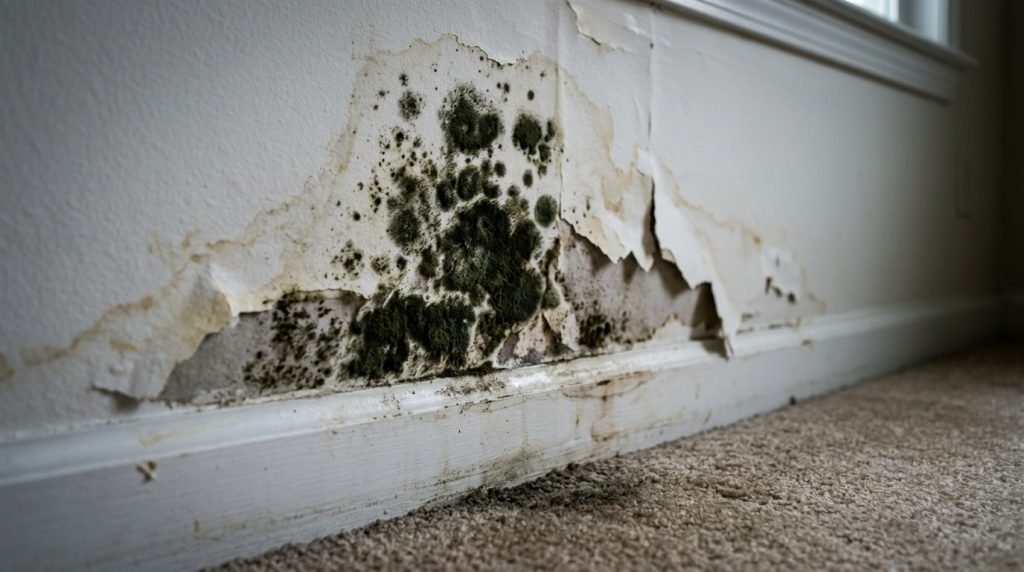
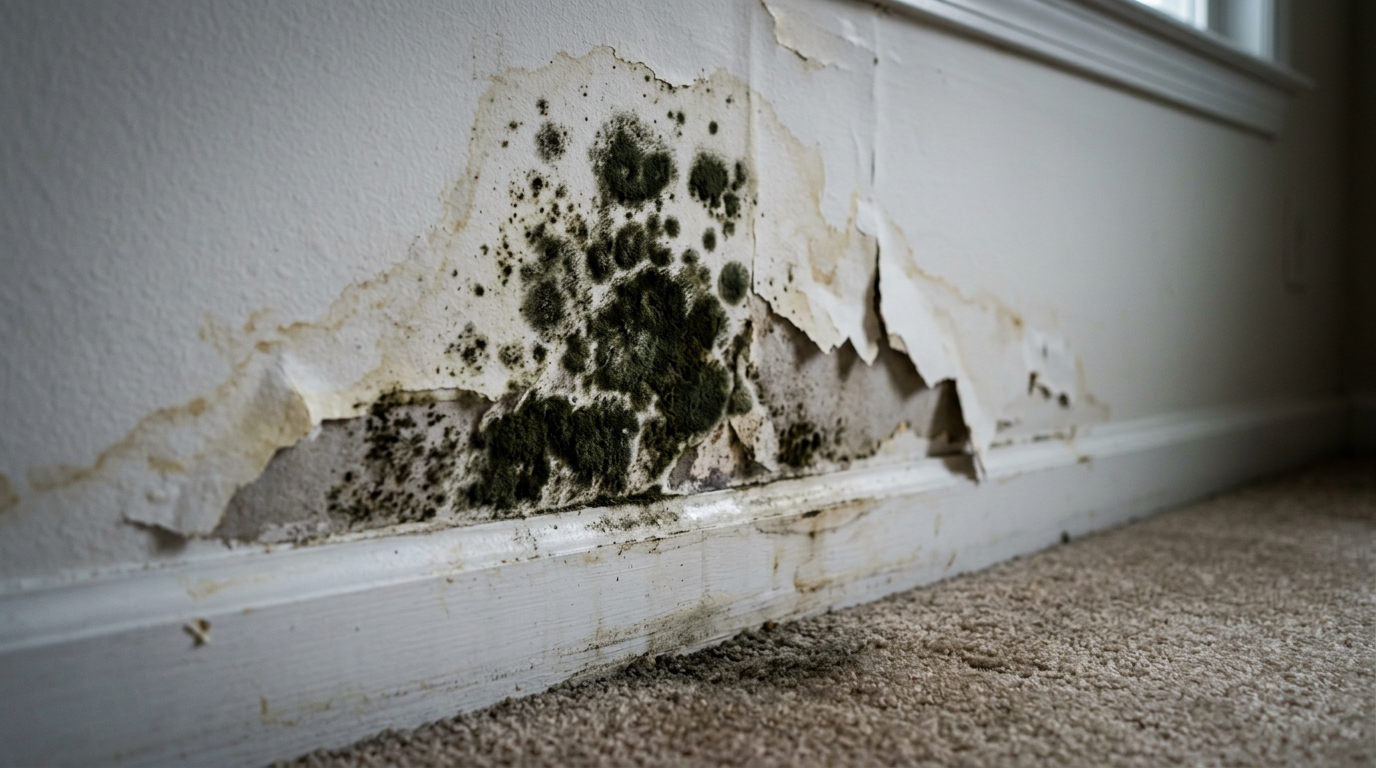
Square footage tells you how much floor got wet. It tells you almost nothing about what that water did once it landed, and that’s the number that actually drives the invoice. The real variables are porosity, how much a material’s structure lets water in, and dwell time, how long the water sat in contact with that material before extraction started. Drywall is a good example. It looks flat and uniform, but the gypsum core is full of microscopic channels that pull water upward against gravity through capillary action, the same mechanism that lets a paper towel climb out of a spilled glass. A flood that measures 2 inches deep on the floor can wick 12 inches or more up the wall before it stops, and that hidden band above the visible waterline is often where the real mold risk starts. Two homes with identical flood depth can end up needing dramatically different amounts of drywall removed, purely because one had water sitting for three hours and the other sat overnight. On a Category 3 water heater loss in Rock Hill, South Carolina, moisture mapping 12 to 18 inches above the visible waterline revealed that the drywall had wicked well past the stain line. That finding led the crew to extend the flood cut in line with IICRC S500 standards and remove the affected material before mold had a chance to take hold.
How carpet pad, drywall, and OSB subfloor each fail differently
Homeowners tend to talk about “water damage” as one thing. It isn’t. Carpet pad, drywall, and OSB subfloor are built differently, absorb differently, and fail at different thresholds, which is exactly why one house’s flood turns into a full subfloor replacement and another’s doesn’t.
| Material | How it absorbs | Failure threshold |
|---|---|---|
| Carpet pad | Open-cell foam soaks up water like a sponge and holds it against the carpet backing | Often unsalvageable after any significant soaking, regardless of dwell time |
| Drywall | Gypsum core wicks moisture upward through capillary action | Depends on wicking height and how long moisture stayed in contact |
| OSB/plywood subfloor | Wood fibers absorb moisture and swell, with behavior varying by wood type and existing moisture content | Depends on swelling and whether moisture content readings trend back down toward dry standard |
Carpet pad is the material most people overestimate. Even a short soak tends to compromise it structurally, because the open-cell foam holds contaminated water against the carpet backing in a way that’s hard to fully flush clean. Drywall and subfloor are the opposite: they’re often more salvageable than people assume, but only if drying starts before wicking or swelling locks in. The most common mistake is judging the pad by how it looks or feels rather than by the category of water involved. IICRC S500 guidelines call for replacing the pad after any Category 2 or Category 3 loss no matter how clean it appears, since pad is inexpensive compared to the odor, microbial, and liability risks of trying to save it.
What moisture readings to demand before accepting a drying timeline
A drying timeline is not a calendar entry someone hands you. It’s a set of measurements, and you’re entitled to see them regardless of who’s running the equipment. Before accepting any timeline, ask for:
- Moisture meter readings on every affected material, taken at the start and logged at intervals, not just checked by hand
- The dry standard for each specific material, drywall, subfloor, framing lumber, since each has a different target moisture content
- Humidity and temperature logs from the drying equipment itself, since drying speed depends on the air’s ability to hold more moisture, not just on running fans longer
- A trend, not a single reading. One low number on one day means nothing if the material was higher the day before; you want to see consistent movement toward dry standard
On a small, contained leak with no hidden cavities, simpler monitoring is often perfectly reasonable, and paying for extensive daily documentation on a one-room, same-day catch is overkill. The more detailed monitoring earns its cost when water has traveled behind walls, under flooring, or into framing where you can’t see the outcome for yourself. In those cases, a penetrating pin meter paired with a daily moisture map becomes the go-to approach. Thermal imaging and a pinless meter help locate where the water traveled, and taking pin readings at the same marked points each day, logged against a dry standard from an unaffected area, shows whether the wall cavity or subfloor is actually trending toward dry in line with IICRC S500 standards.
Frequently asked questions
When does drying equipment stop helping and start just costing more?
Drying equipment stops adding value once moisture content readings plateau for two consecutive days despite continued airflow and dehumidification. Past that point, the material has released what it’s going to release under those conditions, and continued runtime mostly adds to the equipment rental bill without moving the number closer to dry standard.
What moisture reading actually counts as dry, versus just dry to the touch?
“Dry to the touch” only tells you the surface has evaporated; it says nothing about the core. A material is actually dry when a moisture meter reading matches the established dry standard for that specific material type, typically a range set by the manufacturer or industry reference, not a single universal number across drywall, wood, and framing.
When does water damage move from a repair job into a full replacement decision?
Replacement becomes the right call when moisture content readings stop trending downward over several consecutive monitoring days, when swelling has visibly distorted a material’s shape, or when contamination (sewage, standing water past 24-48 hours) makes the material a biological risk regardless of how dry it eventually reads.
Does homeowners insurance cover the cost difference between drying materials and replacing them?
Coverage depends on the policy and the cause of loss, but most policies distinguish between mitigation (drying, extraction) and repair/replacement, and both are commonly covered under sudden, accidental water damage claims. Coverage for gradual leaks or unaddressed maintenance issues is far less consistent, so the cause of the water matters as much as the material.
Is there a point where drying in place isn’t worth the reflooding or recontamination risk?
Yes. If the source of water hasn’t been fully stopped, or if the water carried sewage or standing contamination for more than a day or two, drying in place risks locking in bacteria or mold behind a wall that looks fine on the surface. In those cases, removing the material is generally safer than trying to dry around a contamination risk.
Making the call on your own property
Start with the moisture readings, not the visible damage. If a wall or floor looks fine but the water sat for more than a few hours, ask whoever is assessing it to check moisture content above the visible waterline before anyone decides what stays and what comes out. If you’re dealing with wicking damage that’s traveled behind drywall or under flooring where you can’t see the extent yourself, Statewide Restoration Inc uses moisture mapping to document exactly how far water traveled before a drying or removal plan gets locked in.