
Key Takeaways
- Standing water is rarely the first threat; ceiling drywall holding pooled water and subfloor sitting under wet insulation can fail structurally before extraction even starts.
- A roof leak spreads slowly through insulation and ceiling cavities over hours, while rising water saturates flooring and drywall in minutes, so the two failure modes need different first moves.
- Materials that stay wet past roughly 24 to 48 hours cross into mold colonization territory, regardless of how the damage looks on the surface.
- A stained ceiling or damp carpet tells you almost nothing about what’s happening in the wall cavity behind it; moisture readings do.
The water is rarely the emergency. What’s happening inside the walls and ceiling during that first hour is usually what decides whether a room gets salvaged or gutted. First-hour storm response is the set of structural and safety checks, ceiling integrity, subfloor stability, electrical exposure, that has to happen before any water gets extracted at all.
The first-hour emergency is structural risk, not standing water
The instinct is to grab a pump or a wet vac and start moving water, because water is what you can see. That instinct is backwards. In the first hour after a roof intrusion or flooding event, the more urgent question is whether the structure itself is still safe to work in. Ceiling drywall holding pooled water above it can sag and collapse under its own weight before anyone realizes how much water is trapped up there. A subfloor that’s been sitting under saturated insulation can lose enough rigidity that walking on it becomes a fall risk. Any electrical system now sitting in moisture, outlets, junction boxes, wiring behind a soaked wall, needs to be checked and often de-energized before extraction crews can safely enter that space at all. The clearest warning sign is visible sagging or bowing, or a spongy give underfoot or overhead, and that’s what crews check for before starting work. This is why the actual first-hour sequence isn’t “start pumping.” It’s assess what’s failed structurally, confirm the space is safe to enter, then extract. Skip the assessment and you’re not saving time. You’re gambling with a collapse.
Roof leaks and rising water damage a home on two different timelines
Homeowners tend to file every storm event under one heading: “water damage.” But a roof leak and a flooded foundation are almost opposite problems in how they behave.
| Roof intrusion | Rising water (flooding) | |
|---|---|---|
| Entry point | Through the roof, into attic and ceiling cavities | Through the foundation, doors, or ground level up |
| Spread pattern | Slow, gravity-fed through insulation and ceiling framing over hours | Fast, saturates flooring and lower drywall within minutes |
| What fails first | Ceiling insulation compresses and sags; drywall softens from above | Baseboards, drywall, and flooring wick moisture from below |
| Realistic window before materials need replacing instead of drying | Often longer, since water is diffusing rather than pooling | Often shorter, especially with contaminated or standing water |
A roof leak gives more room to breathe on materials, but less visibility, since the worst damage is hidden above a ceiling you can’t see into. Rising water is the opposite: obvious and fast-moving, but often more forgiving on wall cavities that weren’t fully submerged. Treating both the same way, over-reacting to a slow roof leak or under-reacting to fast floodwater, is how rooms that could have been dried end up gutted instead. The most common mistake homeowners make is underreacting to a slow roof leak because it looks minor, not realizing that the extended exposure time often causes worse hidden mold and structural damage than a dramatic, fast-moving flood.
Surface staining and damp carpet don’t reveal what’s happening behind the wall
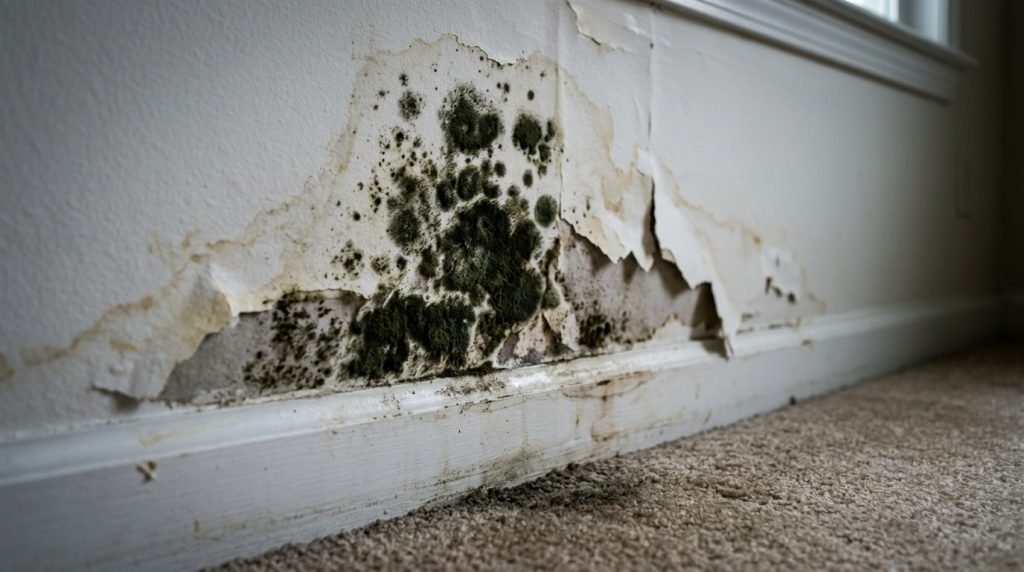
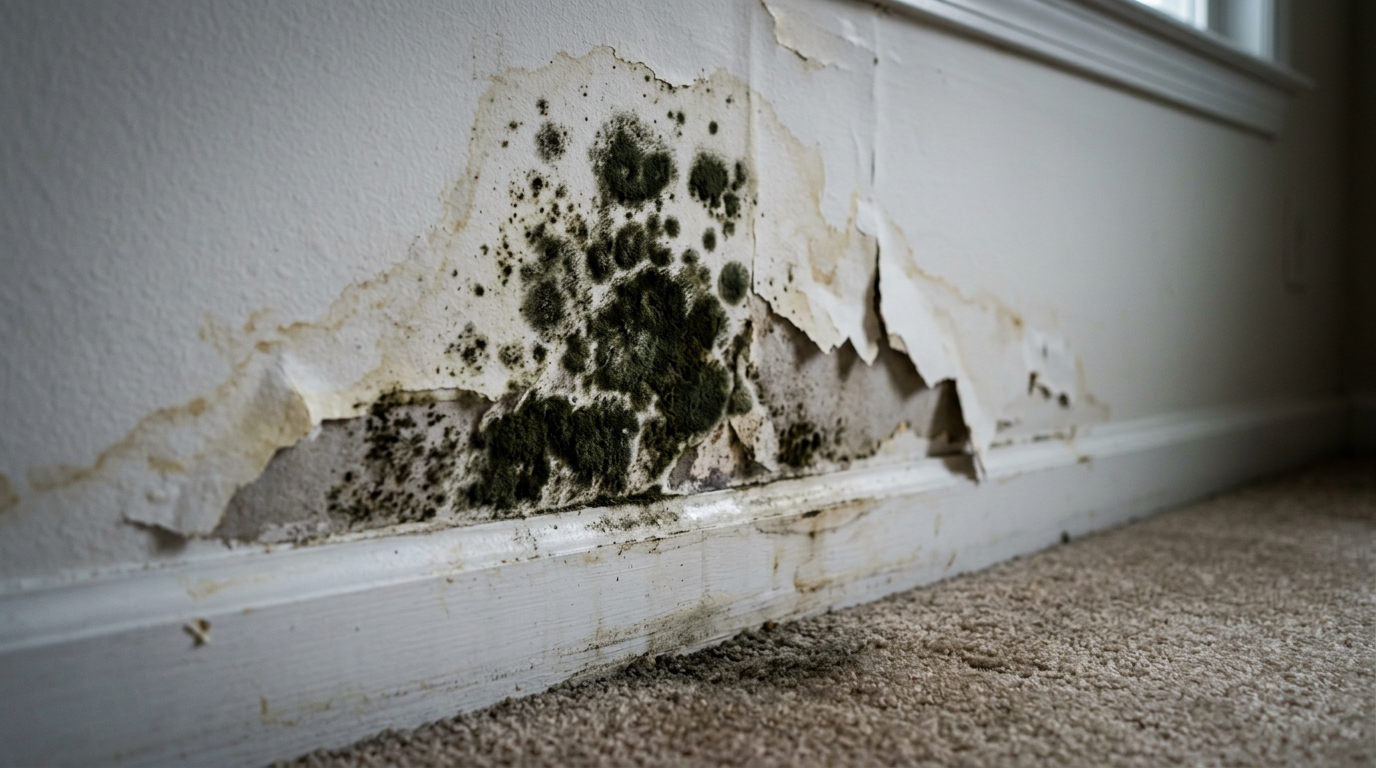
A stained ceiling patch or a damp carpet edge tells you almost nothing about what’s actually happening inside the structure. Judging severity by what’s visible is the single most common mistake homeowners make after a storm, and it usually costs more later, not less. Before assuming anything is “just cosmetic,” check for:
- Moisture readings behind the drywall, not just surface dampness. A wall can look dry and still be wet enough behind the surface to breed mold.
- Insulation condition. Compressed, slumped, or matted insulation has already lost its ability to dry in place and typically needs to come out.
- How long materials have actually been wet. This matters more than how bad they look. Materials that cross roughly the 24 to 48 hour mark wet are entering the window where mold colonization typically begins, according to the EPA, which notes that decisions made in the initial hours after a water event have effects that outlast the event itself.
- Whether the ceiling has any bounce or give when lightly pressed, a sign the drywall has already absorbed more than it’s showing.
On a small, contained leak caught within a few hours and dried immediately, a simpler fix and a fan are genuinely enough. The deeper assessment only earns its cost when materials have been wet long enough, or the water source dirty enough, that hidden damage is a real possibility. On one job, a homeowner assumed a leak was minor, but a closer assessment uncovered hidden black mold covering roughly 150 square feet behind the drywall and exterior sheeting, material that had already been compromised and needed to be removed.
Frequently asked questions
How long does water damage restoration take after a storm?
It depends heavily on how much material absorbed water and for how long before drying started. A contained leak caught early might dry out in a few days with equipment running continuously. A saturated subfloor or wall cavity that sat wet for over 48 hours takes longer and may need material replacement rather than just drying.
Are roof repair and water damage restoration covered as one insurance claim or two?
They’re frequently treated as separate line items even when they stem from the same storm, since one covers the building envelope failure and the other covers the resulting interior damage. Coordinating both with the adjuster at the same time, rather than sequentially, tends to prevent gaps in what gets approved.
When does a water-damaged ceiling need replacing instead of drying and repair?
Once drywall has visible sagging, bounce, or has been wet long enough to pass the roughly 24 to 48 hour window before mold risk sets in, drying in place is no longer reliable. A ceiling that’s still firm, was caught quickly, and shows only surface staining can often be dried and repaired instead.
Should I call a roofer or a restoration company first after a roof leak?
If water is actively pooling in a ceiling cavity, has reached electrical systems, or has been sitting for more than a few hours, the interior structural and moisture risk needs assessment before or alongside the roof repair itself, not after it. A roofer fixes the entry point; they typically aren’t assessing what the water already did inside the walls.
Where to go from here
Before calling anyone, do the two things that actually change the outcome: check whether the ceiling or floor has any give underfoot, and note roughly how long the area has been wet. Those two facts determine whether you’re looking at a same-day dry-out or a materials-replacement job, and any competent assessment starts there. If you’re dealing with a roof intrusion or rising water where you’re unsure whether the structure is still safe to work in, Statewide Restoration Inc’s rapid response team handles that first-hour structural and moisture assessment directly, typically arriving within 60 minutes across Charlotte and surrounding areas.