
Key Takeaways
- A moisture reading is a percentage relative to a dry-standard baseline, not a yes/no wetness check, so one reading on day one is meaningless without a follow-up reading showing the trend moving toward dry standard.
- Line-item pricing (equipment-days, square footage, materials removed) lets you verify the bill matches the work; a flat rate can quietly hide a drying cycle that stopped early.
- Equipment count on an estimate isn’t padding. Air movers and dehumidifiers are sized to the room’s cubic footage and its water category and class, following IICRC S500 guidance.
- On a small, contained leak with no wall or subfloor saturation, a simpler approach and fewer line items is the right call, not a red flag.
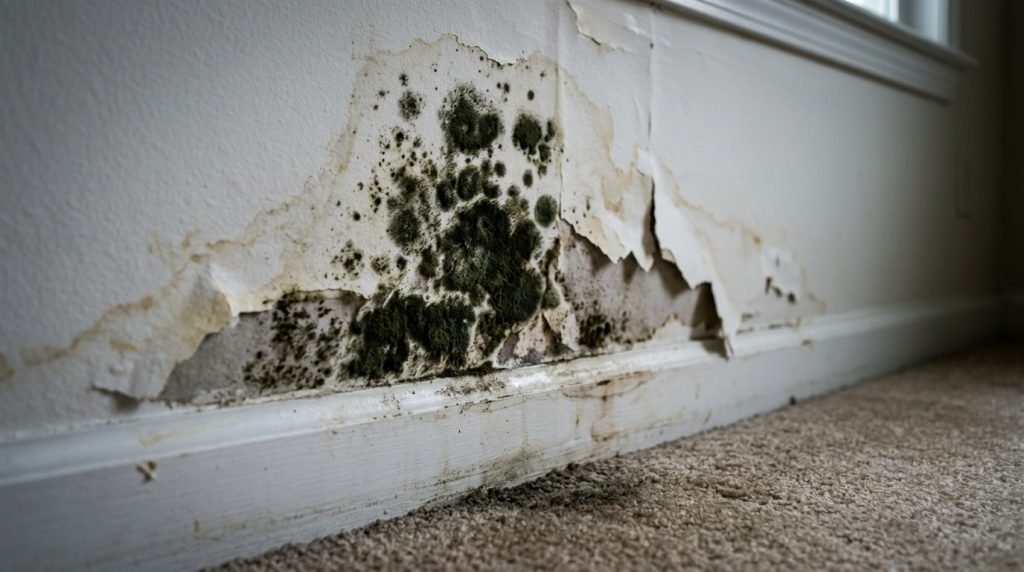
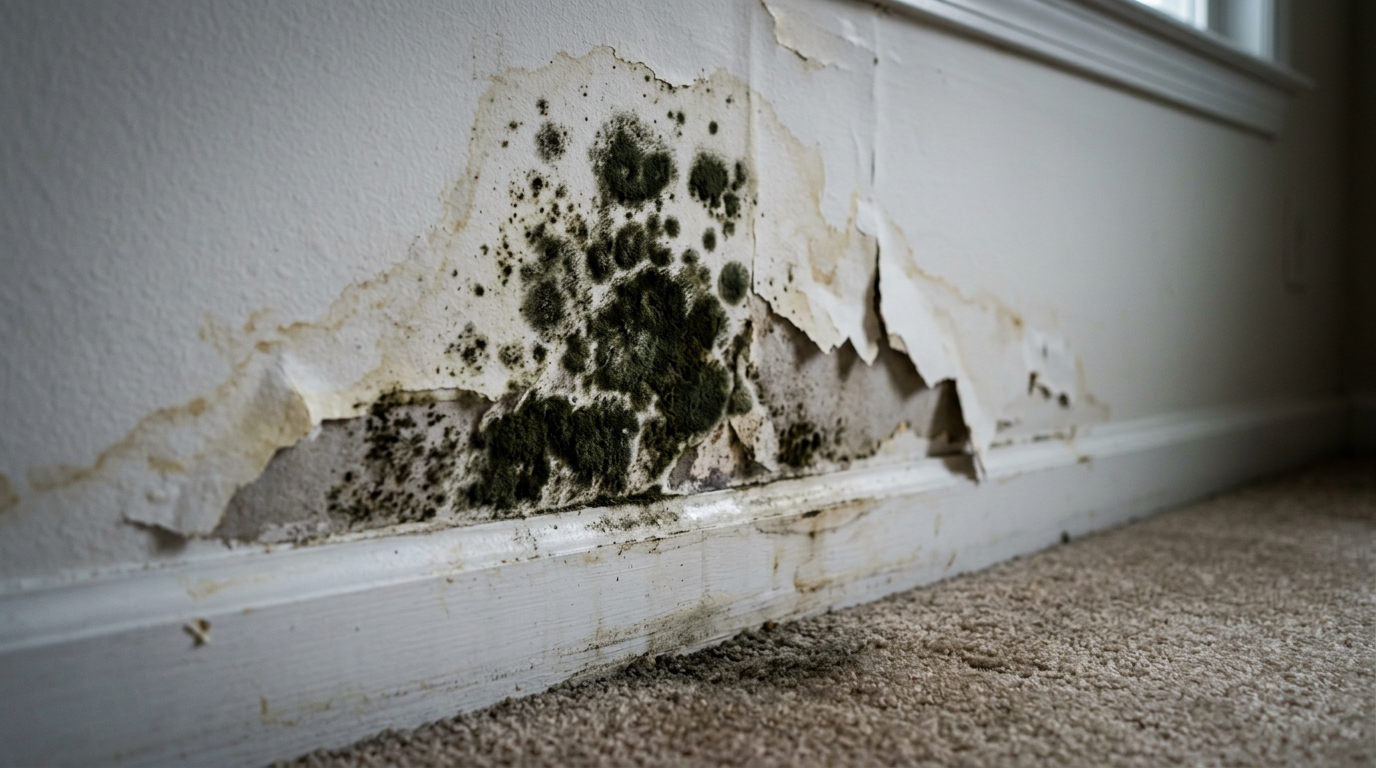
- Drying that stops before a material hits dry standard leaves trapped moisture that can support mold growth within 24 to 48 hours.
A water damage restoration estimate reads like a price quote, but it’s actually a diagnostic document: a record of what’s wet, how wet, and what it will take to get it dry. Most homeowners never learn to read the parts that matter until months later, when hidden moisture turns into a mold problem.
A moisture reading is a percentage against dry standard, not a wet-or-dry verdict
A moisture reading isn’t a wet-or-dry verdict. It’s a percentage measured against a dry-standard baseline established for that specific material, in that specific structure, before anything got wet. Drywall, subfloor, and framing lumber all hold and release moisture at different rates, so a single number on the first visit tells you almost nothing on its own. What matters is the trend. A technician takes an initial reading, then returns on subsequent visits to see whether the number is actually closing the gap toward dry standard. If a wall stud reads high on day one and reads nearly the same on day three, something is wrong with the drying setup, not the material. When drying stalls instead of trending toward dry standard, the fix usually means getting more aggressive with the setup, opening up more of the damaged area, and adjusting temperature by either reducing or adding heat as needed. If your estimate lists only one moisture reading with no plan for follow-up documentation, ask why, a job without tracked readings over time is a job nobody can verify actually finished.
Line-item pricing lets you verify the work; flat-rate pricing can hide a shortened dry
Neither pricing structure is inherently better. The real issue is what each one lets you verify. A flat rate quotes one number for the whole job and discloses very little about how that number was built. Line-item pricing breaks the job into equipment-days, square footage dried, and materials removed, which gives you something to check the finished work against.
| What it discloses | What it can hide | |
|---|---|---|
| Flat-rate pricing | One predictable total | Whether drying ran the full cycle or stopped early to protect margin |
| Line-item pricing | Equipment-days, sq ft, materials removed, so you can verify the bill matches the work | Can look larger upfront if you don’t understand what each line represents |
A lower flat number feels safer, but if you can’t tell whether the dehumidifiers ran for four days or seven, you can’t tell whether the room actually reached dry standard. Ask for the line items even on a flat-rate job. Customers tend to become noticeably more open to an estimate once they actually see what a line-item breakdown looks like instead of just a flat number. A contractor confident in their work will show you the math behind the number.
What each line on a soaked-carpet estimate is actually protecting against
Picture the estimate in front of you: a living room with soaked carpet, wet baseboards, and drywall that reads high on the meter. The document lists carpet pad removal, wall drying with baseboard removal, and an antimicrobial application, and each line changes the outcome if it’s missing. Carpet pad removal versus carpet salvage matters because pad is dense foam that traps water against the subfloor long after the visible carpet feels dry to the touch. If the pad stays in, the subfloor underneath it may never reach dry standard no matter how many air movers run in the room. Baseboard removal for wall drying exists because drywall wicks water upward from the floor, and a sealed baseboard traps that moisture behind it like a lid. Pulling a few inches of baseboard lets air reach the wet cavity directly instead of drying the surface while the interior stays saturated. Antimicrobial application is a preventive step, not a cleaning step. It slows microbial growth on porous materials during the drying window; the drying itself is what actually removes the moisture. One misconception worth correcting is the assumption that antimicrobial agents get sprayed before fans and drying equipment are even set up, when in fact that step comes after the drying process is underway, not before it. If any of these three lines is missing and the corresponding condition exists in the room, ask the estimator directly why it was left off.
Equipment count is sized to cubic footage and water category, not padded for profit
Equipment count is math, not an upsell. Air movers and dehumidifiers are sized to the room’s cubic footage and to the water category and class defined in the IICRC S500 standard, which classifies water intrusions by contamination level and by how much of the structure and its materials are affected. A room with soaked carpet and wet walls holds more water in more materials than a room with a small isolated spill, and it needs proportionally more equipment to hit dry standard in a normal window. Before you sign, check a few concrete things: Does the equipment count on the estimate scale with the square footage listed, or does a large room have a suspiciously small number of air movers? Is a dehumidifier’s rated capacity listed anywhere, or just “1 dehumidifier” with no specification? Does the estimate distinguish between the water category (contamination level) and the class (how much material is affected), or does it treat every job the same? Is there a stated plan to add or remove equipment as readings change, or is the count fixed from day one regardless of how drying progresses? On a small, isolated leak with no wall saturation and no standing water, a heavier equipment package is overkill, not diligence. The math should match the actual water intrusion in front of you, not a default package applied to every job regardless of size.
Frequently asked questions
How long should a water damage drying cycle take to reach dry standard?
Most contained residential drying cycles run three to five days, though the real driver is how saturated the materials were at the start and how quickly drying began. Denser materials like subfloor and framing hold moisture longer than drywall, so a job with structural saturation can extend well past the initial estimate.
Does homeowners insurance cover water damage restoration?
Coverage depends on your policy’s cause-of-loss language and whether the damage is classified as sudden and accidental versus long-term neglect. A burst pipe is typically covered; a slow leak that went unaddressed for months often isn’t. Reviewing your policy’s water damage exclusions before a loss happens saves confusion later.
What happens if drying stops before a room reaches dry standard?
Trapped moisture in materials like subfloor, wall cavities, or carpet pad has no way to evaporate once equipment is removed. That residual moisture can support mold growth within roughly 24 to 48 hours in the right conditions, and it often shows up weeks later as odor, discoloration, or a soft spot in flooring.
Do I need professional drying equipment for a small water leak?
A small, isolated spill on a hard surface with no absorption into carpet, pad, drywall, or subfloor can often be handled with fans and time. Once water has soaked into a porous material or sat for more than a day, professional-grade air movers and dehumidifiers are needed to reach dry standard reliably.
How do I know if mold has already started before restoration begins?
Look for a musty odor, visible discoloration on drywall or baseboards, or a soft, spongy feel underfoot on carpet or flooring. Mold can begin colonizing within one to three days of sustained moisture, so if water sat unaddressed for more than a day or two, assume growth may already be underway and inspect accordingly.
Where to go from here
Start by asking for the moisture readings and the equipment count on any estimate you’re handed, and don’t sign until both are explained in plain terms. If the answers are vague or the estimate has no plan for follow-up readings, that’s worth pushing back on before any drying equipment goes into the room. If you’re dealing with soaked carpet, wet walls, or a burst pipe and want a second opinion on whether a proposed drying plan actually matches the water category and class involved, Statewide Restoration Inc offers free inspections that can pressure-test an estimate before you commit to it.