
Key Takeaways
- Mold begins growing within 24-48 hours after water exposure; speed matters most in preventing spread
- Visible mold often indicates deeper moisture problems hidden in wall cavities, subfloors, or HVAC systems
- Humidity above 60% creates growth conditions even without active leaks, which is significant in Charlotte’s warm, humid climate
- Testing makes sense when the source is unclear or health symptoms appear, but visible mold usually needs removal first, not analysis
Charlotte’s humidity creates perfect conditions for mold. Mold growth occurs when fungal spores colonize organic building materials, typically when relative humidity exceeds 60% for 24-48 hours. A small colony after a leak can quickly become a structural issue because homeowners often wait to see if it spreads or attempt to clean it themselves first. By the time most people call for help, the mold has already moved behind walls.
Why humidity above 60% triggers mold growth even without visible leaks
Mold doesn’t need standing water; it thrives in consistent moisture above 60% relative humidity. housing.unc.edu notes that mold and mildew are common in the South due to the warm, humid climate. This explains why mold appears in bathrooms that never flood and basements that feel dry to the touch.
The growth process begins when spores land on organic material (drywall paper, wood, fabric), moisture raises the relative humidity at that surface, and the spore germinates. Within 48 hours, visible colonies form. The problem worsens as mold releases moisture while growing, creating a feedback loop that accelerates its spread.
Most Charlotte homes maintain 50-55% indoor humidity during summer without active dehumidification. A small roof leak or a slow pipe drip can push the local area past 60%, sparking growth. You won’t see it immediately; the first colonies form in the cavity behind the drywall, not on the visible surface.
By the time discoloration appears on your wall, the problem is already three-dimensional.
Check humidity with a $15 hygrometer on each level of your home. If any room reads consistently above 55%, you’re close enough to the threshold that a minor moisture event will tip it over. Address the baseline humidity first with dehumidifiers or HVAC adjustments, then track down active leaks.
How delayed remediation reduces property value and complicates sales
Many believe mold is a cosmetic issue you can fix before listing. The reality is that disclosure laws require sellers to report known mold problems, and buyers now routinely include mold inspection contingencies. A home with documented mold history sells for less, even after remediation is complete.
Mold spreads through porous materials by breaking down cellulose. Drywall, insulation, and structural lumber lose integrity as the fungus digests them. What begins as surface growth becomes a structural repair once the material is compromised. A $2,000 cleanup job in the first week can escalate to a $15,000 reconstruction project after six months because the framing lumber has softened.
The property value hit comes from two directions. First, buyers see mold as a red flag for deeper moisture problems and negotiate harder on price. Second, lenders require mold clearance before approving a mortgage, which can delay or kill a sale. Appraisers note visible mold and moisture damage, and those notes stay in the property file.
For a small, contained colony caught early, surface cleaning and a dehumidifier may suffice. A specialist approach is necessary when mold has spread behind walls, when the source isn’t obvious, or when health symptoms suggest high airborne spore concentrations. Waiting to see if it gets worse guarantees it will.
Visual and tactile indicators of basement mold damage
Start with what you can see and smell. Visible indicators include:
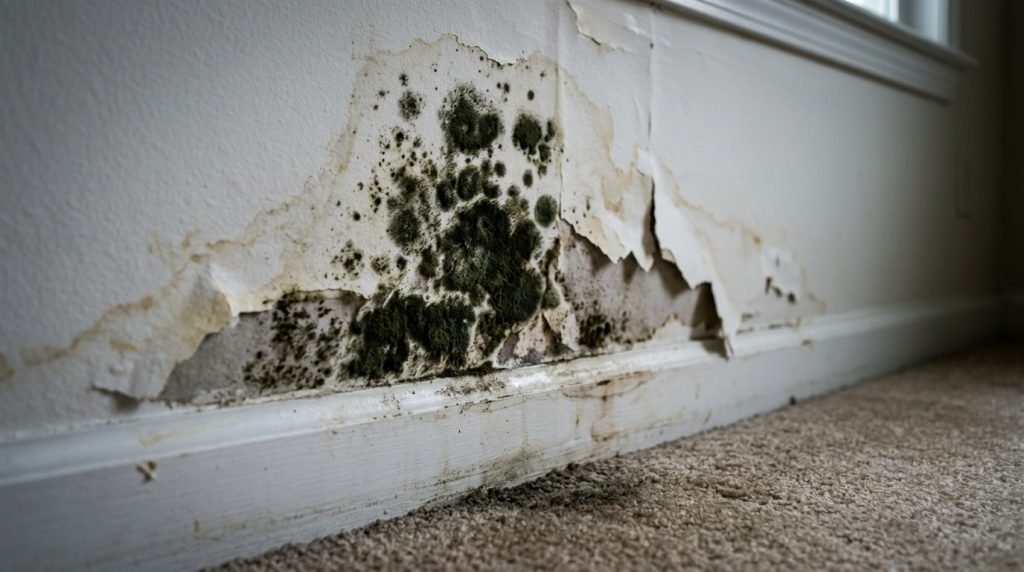
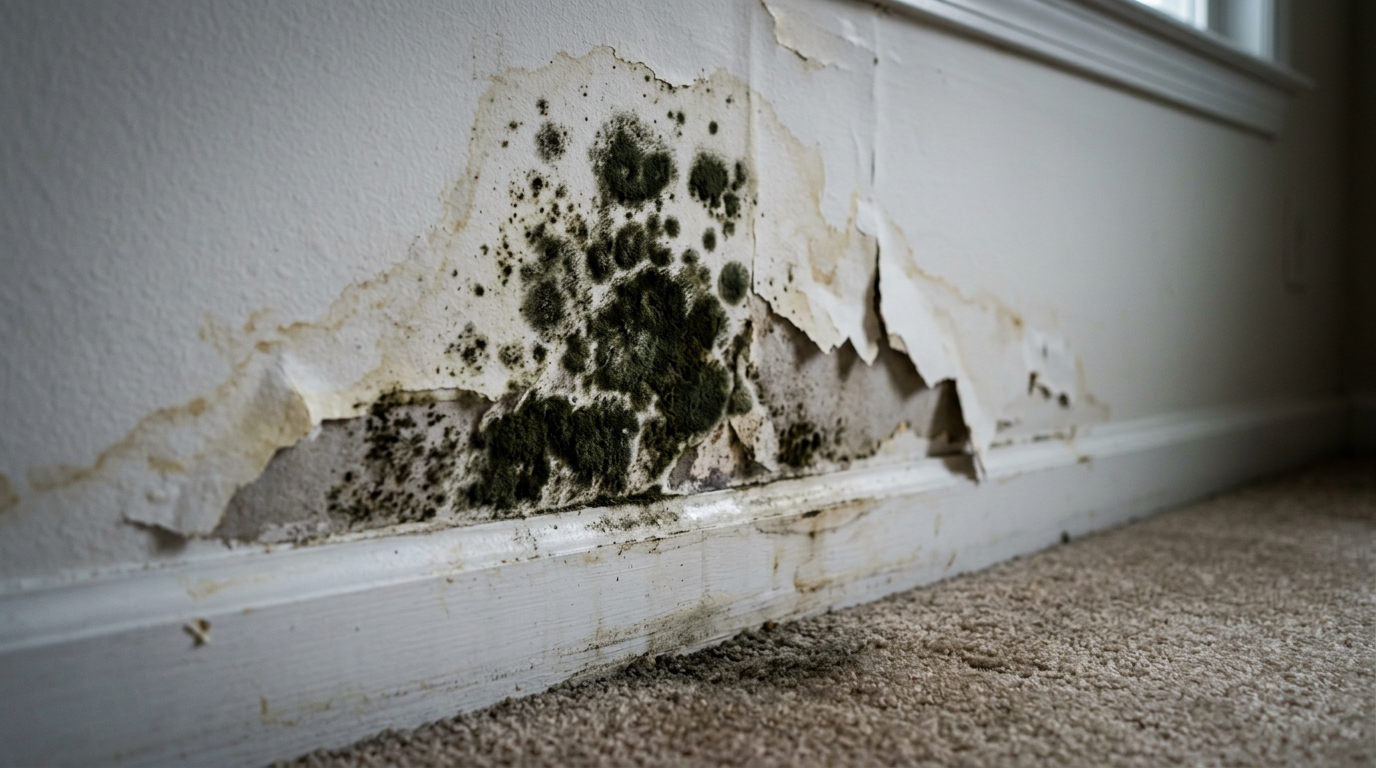
- Discoloration on walls or ceilings: black, green, or white patches that appear fuzzy or slimy
- Musty odor: a persistent earthy smell that doesn’t go away with airing out the space
- Water stains: yellow or brown marks on drywall, especially near corners or along the floor
- Peeling paint or wallpaper: moisture behind the surface pushes finishes off the wall
- Efflorescence on concrete: white chalky deposits where water has wicked through the foundation
Then check what you can’t see directly. Peel back carpet edges near exterior walls and look at the pad underneath. Lift stored boxes and check the cardboard for soft spots or discoloration. Pull the cover off any HVAC return vents and shine a light into the ductwork.
Touch is diagnostic. Press on drywall near suspected areas. Soft or spongy drywall means the paper backing has absorbed water and likely supports mold growth. Baseboards that feel damp or show gaps where they’ve pulled away from the wall indicate ongoing moisture intrusion.
The mistake most people make is checking only the visible surfaces. Mold grows in the first place it finds moisture and food, which is inside the wall cavity, under flooring, or in insulation. Surface mold is the overflow. If you see it on drywall, assume there’s more behind it.
Why visible mold rarely requires testing before removal
Many homeowners believe testing is the first step. The reality is that visible mold almost always needs removal, regardless of species, making testing an unnecessary expense in most cases. epa.gov advises that if you can see or smell mold, you should remove it promptly.
Testing makes sense in three situations. First, when you have health symptoms (respiratory issues, persistent coughing, eye irritation) but no visible mold, testing can identify elevated airborne spore counts and where the hidden source might be. Second, after remediation, clearance testing confirms spore levels have returned to normal outdoor baseline. Third, when buying a home with a history of water damage, testing establishes whether previous problems were fully resolved.
Testing is unnecessary when you can see mold growing on walls, smell it clearly, or have an active leak. The presence of visible mold tells you everything you need to know: moisture is present, growth is occurring, and removal is required. Species identification doesn’t change the remediation protocol because all mold in a building is unwanted.
Another misconception is that some mold is “safe” and doesn’t need removal. All mold growing indoors indicates a moisture problem that will damage materials and potentially affect indoor air quality. The goal is to eliminate moisture and remove growth, not to classify it and decide which types you’re willing to live with.
What to verify before hiring a mold remediation contractor
Start with scope and containment. Ask how they plan to isolate the work area to prevent spores from spreading to clean parts of the house during removal. Proper containment uses plastic sheeting and negative air pressure, not just closing doors. Ask what happens to your HVAC system during the work (it should be shut down or sealed off).
Next, ask about moisture source identification. A remediation company that only removes visible mold without finding and fixing the water source is setting you up for regrowth. They should inspect for leaks, check humidity levels, and identify whether the problem is a one-time event or an ongoing condition.
Ask about the removal method. Porous materials like drywall and insulation with mold growth should be removed and discarded, not just cleaned. Non-porous surfaces like metal or glass can be cleaned. Some companies try to cover up the problem by painting over mold instead of removing the contaminated material first, which only hides the issue temporarily. Be skeptical of anyone offering to “spray” or “fog” a solution as the primary treatment; those methods don’t remove contaminated materials.
Confirm they’ll provide documentation. You want photos of the damage before and after, a written scope of work, and ideally a clearance test showing spore levels have returned to normal. If you ever sell the home, this documentation proves the problem was professionally addressed.
Finally, ask about insurance coordination if you’re filing a claim. Many remediation companies work directly with insurers and understand what documentation and procedures carriers require. Statewide Restoration Inc handles the full process from water damage mitigation through mold remediation and works with all major insurance companies to streamline claims.
Frequently asked questions
How much does professional mold removal cost in Charlotte?
Cost depends on the extent of spread and how much material needs removal. A small isolated area (under 10 square feet) with surface growth runs $500-1,500. Once mold has spread behind walls or into HVAC systems, costs rise to $3,000-10,000 because drywall, insulation, and sometimes framing lumber must be removed and replaced. The price difference comes from labor and material disposal, not the cleaning itself.
What is the typical timeline from water damage to completed mold remediation?
If you call within 24-48 hours of water exposure, remediation can prevent mold growth entirely through rapid structural drying. Once visible mold appears, expect 3-7 days for a typical residential job: one day for containment and removal, 2-3 days for drying, and another 1-2 days for clearance testing and rebuilding prep. Larger projects or those requiring extensive reconstruction take 2-3 weeks.
When does mold testing make sense versus immediate removal?
Testing makes sense when you have health symptoms but no visible mold, after remediation to confirm clearance, or when buying a home with past water damage. If you can see or smell mold, skip testing and move directly to removal because the presence of visible growth already tells you remediation is needed regardless of species type.
How do I know when mold has become a serious structural problem?
Persistent musty odors that don’t go away, visible growth spreading across multiple rooms or levels, health symptoms that improve when you leave the house, and soft or crumbling drywall all indicate the problem has moved beyond surface cleaning. If you see mold reappearing in the same spot after cleaning, the moisture source hasn’t been fixed, and professional remediation is needed.
Can I safely remove small mold patches myself?
Small surface colonies (under 10 square feet) on non-porous surfaces like tile or metal can be cleaned with detergent and water, then thoroughly dried. Increase ventilation and reduce humidity below 50% to prevent regrowth. Do not attempt DIY removal on porous materials like drywall or carpet, inside HVAC systems, or when mold covers large areas because improper handling spreads spores throughout the house.
What to do when you find it
Check your home’s humidity levels now, before you need to. A hygrometer on each level tells you whether you’re close to the growth threshold, and a dehumidifier is cheaper than remediation. If you find mold, act within days, not weeks, because the difference in cost and scope is measured in thousands of dollars.
When the problem is beyond a small surface colony or keeps coming back, Statewide Restoration Inc handles both water damage mitigation and mold remediation with 24/7 emergency response across Charlotte and can coordinate directly with your insurance carrier.