
Key Takeaways
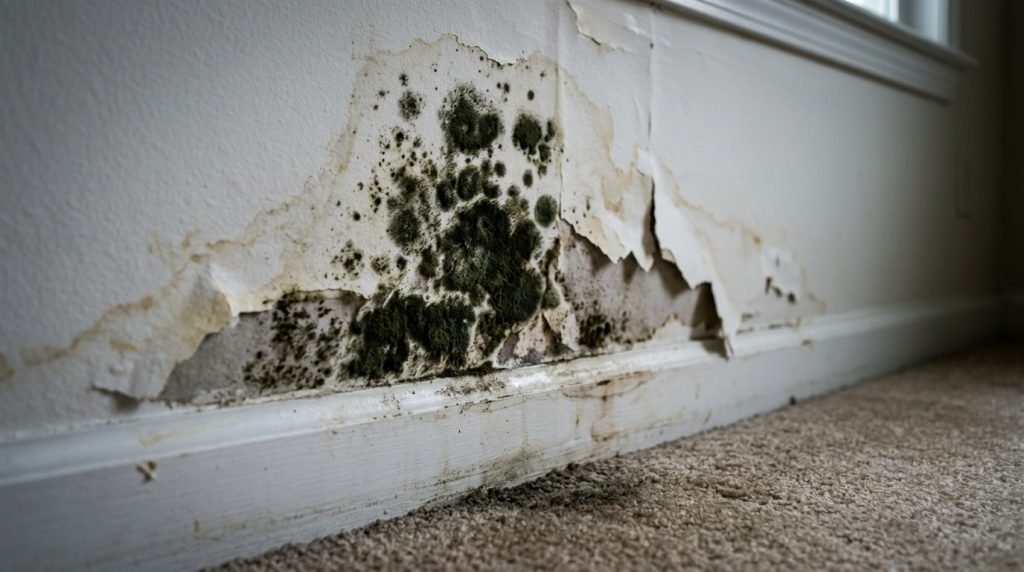
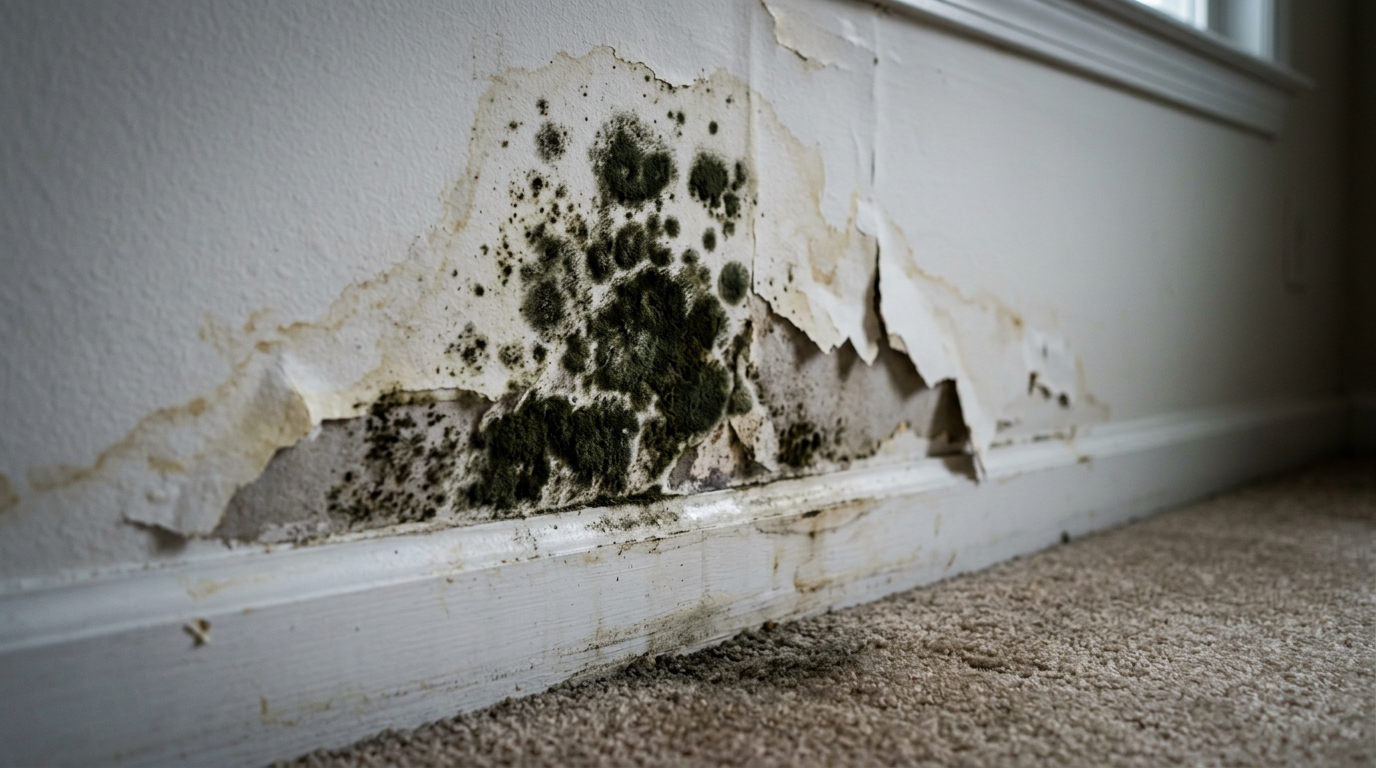
- The visible patch of mold is rarely the whole colony; spores and hyphae can be established behind drywall, under flooring, or inside insulation with no surface sign at all.
- Mold growth accelerates above 60% relative humidity, and a material can look completely dry while its internal moisture content still sits well above that threshold.
- Cleaning a surface and remediating a moisture source are two different jobs; a bleach wipe-down that isn’t paired with source drying almost always regrows.
- Recurrence within 2 to 4 weeks after a cleanup usually means the moisture problem was never actually fixed, not that “the mold came back on its own.”
- According to the US EPA, if you clean up mold without fixing the water problem behind it, the mold will most likely return.
The mold you can see is usually the smallest part of the colony. Mold removal looks like a cleaning problem. It’s actually a moisture problem, and treating it as the former is exactly why it comes back.
The visible patch is a small fraction of the actual colony
Mold colonizes wherever moisture and an organic surface meet, which means the patch on your baseboard or drywall is simply where those two conditions happened to intersect first and stayed wet long enough to show. Behind that same wall, the same moisture is very often touching insulation, the back side of paneling, subfloor, or floor joists, none of which you can see without opening something up. When a wall with only a small visible mold patch is opened up, the moisture has frequently already traveled down into the subfloor or floor cavity below, or migrated several stud bays away, carried by gravity and capillary action far beyond where it first became visible. Spores and hyphae, the thread-like structures that anchor a colony into a material, spread outward from a moisture source, not from the visible patch itself. The stain is usually just the first place moisture broke through to a surface you happened to be looking at. Everywhere else that same water traveled is fair game for growth, whether or not it’s stained yet.
Why a humidity reading catches what a visual inspection misses
A surface can look bone dry and still be actively feeding mold growth, because “dry to the eye” and “dry by moisture content” are two different measurements. Mold growth typically accelerates once relative humidity in a space climbs above 60%, and drywall, framing lumber, and subflooring can hold moisture well above the level that sustains growth while looking completely normal. Check these instead of trusting your eyes:
- Relative humidity in the room: under 60% is the general target; sustained readings above that, even with no visible staining, mean conditions are favorable for growth somewhere in that space.
- Moisture content of the material itself, not just the air around it: a wall or floor can read dry-to-touch and still carry elevated internal moisture that a surface glance will never catch.
- How long a reading stays elevated: a brief spike after a rainstorm is different from a material that won’t drop back down over several days, which points to a source that’s still active.
- Where the reading is highest: moisture readings that climb the lower you go on a wall usually point to ground or plumbing intrusion, not just humidity in the air.
A number is a fact. A glance is a guess.
Why cleaning a surface is not the same job as remediating a moisture source
Wiping mold off a surface and remediating a mold problem are often treated as the same task with different price tags. They’re not. One addresses the organism sitting on top of a material; the other addresses the conditions that let the organism grow in the first place. Homeowners most often assume the job is done simply because the visible stain is gone and the surface looks clean again, without realizing that appearance alone says nothing about whether the underlying moisture has been resolved.
| Cleaning | Remediation | |
|---|---|---|
| What it targets | The visible surface organism | The moisture source and affected structure |
| Scope | Wipe, scrub, or spray a surface area | Containment, source drying, material assessment |
| Time horizon | Short-term appearance fix | Addresses the cause, not just the symptom |
| What happens if the source is still wet | Mold returns, often in the same spot | Material is dried below the threshold that sustains growth |
A surface that’s cleaned but never dried below the growth threshold isn’t actually finished. It’s paused. The organism was removed; the environment that grew it wasn’t touched, so the outcome is predictable rather than mysterious. For a small, isolated surface spot with a known, already-fixed moisture source, cleaning alone is reasonable. The gap only opens up when nobody actually confirmed the source was fixed before calling it done.
Why a clean-looking surface doesn’t mean the mold problem is solved
The common belief is that no visible mold after a cleanup means the problem is resolved. That’s backward. Mold is a symptom, not the disease. Moisture is the cause, and a clean-looking surface tells you nothing about whether the cause was ever addressed. The real gauge is what happens over the next 2 to 4 weeks. Recurrence in that window is a strong signal the original moisture source, not the mold itself, was never fully dealt with. As the US EPA puts it plainly: if you clean up the mold but don’t fix the water problem, the mold problem will most likely come back. Instead of just watching for stains to reappear, schedule a follow-up moisture check at around the two-week mark on the same surface and, ideally, on adjacent materials that were near the original wet area. A moisture meter is the tool to rely on for confirming that a material’s moisture content has actually dropped below the level that sustains mold growth. If those readings are back in normal range and holding, the source is likely fixed. If they’re still elevated, the mold you wiped away was never the actual problem, and it’s only a matter of time before it, or something nearby, shows up again.
Frequently asked questions
How long does mold remediation take from assessment to completion?
Timelines vary with how far moisture traveled before it was addressed and how many materials were affected, since drying to a safe moisture level takes time regardless of how quickly the visible mold itself is removed. Smaller, contained situations move faster than ones where moisture reached multiple materials or cavities. A firm timeline should come only after an actual moisture assessment of the affected areas.
Will homeowners or renters insurance cover mold remediation costs?
Coverage depends heavily on the cause: mold resulting from a sudden, covered event like a burst pipe is more commonly covered than mold from long-term humidity, a slow leak, or deferred maintenance, which many policies exclude. Review your specific policy language on mold and water damage, and document the source of the moisture as early as possible.
Is it safe to clean a small mold patch myself without professional remediation?
A small, isolated surface patch with a clearly identified and already-fixed moisture source can often be cleaned safely without a full remediation process. The risk isn’t the size of the patch; it’s whether the moisture source behind it is actually resolved. If you can’t confirm that, treat the cleanup as temporary rather than final.
Does a musty smell without visible mold still mean I need remediation?
A musty odor with no visible growth usually means mold is present somewhere you can’t see, such as behind a wall, under flooring, or inside a cavity, since the smell comes from microbial volatile compounds the organism releases as it grows. Odor without a visible source still warrants a moisture check in the area, not a shrug.
What’s the difference between mold remediation and mold prevention?
Remediation addresses an active mold problem: removing affected material, drying the source, and confirming moisture levels return to normal. Prevention is ongoing environmental control, keeping relative humidity below the level that supports growth and fixing minor moisture issues before they become sustained ones. One responds to a problem that already exists; the other keeps new ones from starting.
Making the call on your basement
Before you treat any cleanup as finished, get an actual moisture reading on the affected material and the surrounding area, then check it again in two to four weeks rather than relying on how the surface looks. That single follow-up tells you more than a visual inspection ever will. If a basement mold patch has already come back once, or you’re not sure the original moisture source was ever actually found, Statewide Restoration Inc’s IICRC-certified technicians can run that moisture assessment and confirm whether the source, not just the mold, has actually been resolved.