

Key Takeaways
- Musty odors and visible discoloration appear days before structural damage becomes obvious, but mold growth can start within 24-48 hours of water intrusion.
- Warped floors and soft spots indicate moisture has compromised subflooring and framing. Waiting to address these means replacing structural components instead of drying them.
- Peeling paint and bubbling drywall show water has traveled behind finished surfaces, damaging insulation, wiring, and framing you can’t see.
- Higher-than-normal humidity readings (above 60%) mean moisture is still evaporating into your space even after visible water disappears, extending damage and creating ideal mold conditions.
The costliest damage happens hours and days after visible water recedes, when moisture trapped in walls, under floors, and inside structural cavities continues degrading materials. Water damage that needs immediate attention is moisture intrusion that has penetrated building assemblies and begun compromising structural integrity, creating conditions for mold growth within 24-48 hours. By the time you notice peeling paint or a soft spot in the floor, the real damage, compromised framing, mold colonies, corroded wiring, has already taken hold.
Where water hides after the visible pooling disappears
Water follows gravity and capillary action, so a leak in one room can travel through wall cavities and floor assemblies to emerge elsewhere. You might see a stain on a first-floor ceiling while the actual source is a second-floor bathroom three rooms over. Moisture wicks through drywall, insulation, and wood framing without leaving surface evidence until the material is saturated enough to fail.
Check for temperature differences on walls and floors using your hand. A wall that feels cooler than surrounding surfaces often indicates moisture inside the cavity; evaporation pulls heat from the material. Look for texture changes in drywall: slight bubbling or a soft feel when you press indicates the paper facing has absorbed water and separated from the gypsum core.
Baseboards pull away from walls when the bottom plate of the wall framing swells from moisture. Consumer Reports notes that creaking floorboards in soft woods like pine can signal water damage affecting the subfloor structure. Pay attention to doors and windows that suddenly stick or won’t close properly; wood swells as it absorbs moisture, and frames distort as studs twist.
Run your hand along the edges of carpets and under area rugs. Damp carpet edges mean water has wicked through the pad and is sitting against the tack strip and baseboard, conditions that can produce mold within two days.
Why waiting 72 hours turns a drying job into a demolition project
Mold spores are always present in indoor air. They need three things to colonize:
- Moisture
- Organic material (drywall paper, wood, insulation)
- Time
Within 24 hours of water intrusion, spores begin germinating. By 48 hours, visible colonies form on damp surfaces. By day three, mold has penetrated porous materials and started producing mycotoxins. At that point, affected drywall and insulation can’t be dried and reused; they must be removed and replaced.
Structural damage accelerates on a similar timeline. Wood framing absorbs water rapidly. A 2×6 stud can gain 30% moisture content in 48 hours when surrounded by saturated drywall and insulation. At that moisture level, wood loses structural integrity and becomes a breeding ground for rot fungi. Steel fasteners and electrical components begin corroding within three days of continuous moisture exposure.
Flooring damage occurs faster than most materials. Hardwood cupping (edges higher than centers) starts within hours and becomes irreversible after 72 hours of moisture exposure. Laminate flooring delaminates; the fiberboard core swells and the photo layer separates within 24 hours. Carpet padding compresses and loses its cushioning permanently after 48 hours of saturation, even if the carpet itself can be dried.
The cost difference is clear. Drying wet materials in place costs a fraction of demolition and replacement. But that window closes quickly, usually within 72 hours for most building materials.
5 signs your property needs urgent water damage mitigation
Musty or earthy odors in specific rooms or areas indicate microbial volatile organic compounds, the byproducts of mold metabolism. If you smell it, colonies are already established and actively growing. The odor often appears before visible mold because growth starts inside wall cavities and under flooring where air circulates but light doesn’t reach.
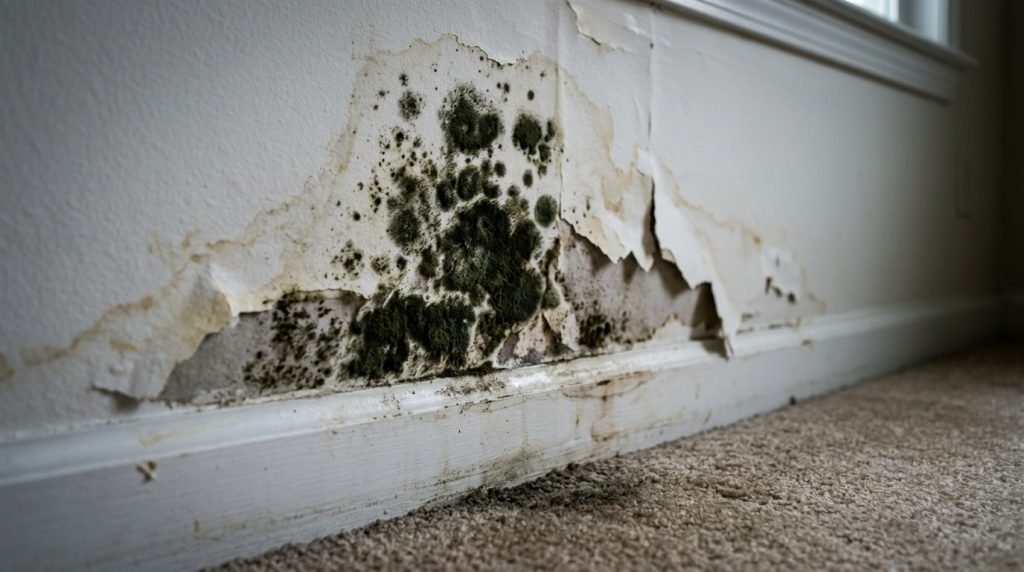
Visible water stains, discoloration, or dark spots on ceilings, walls, or floors mean water has fully saturated the material and begun leaching tannins, rust, or other compounds. A brown ceiling stain from a roof leak indicates the drywall, insulation, and framing above are all wet. Stains spread as moisture continues wicking through materials.
Warped, buckling, or sagging floors occur when moisture causes the OSB or plywood subfloor to swell unevenly. Sagging indicates the floor joists themselves have absorbed water and lost stiffness. Both conditions mean structural components are compromised and need immediate drying or replacement.
Peeling paint, bubbling drywall, or soft spots when you press on walls show that moisture pushes through from behind, breaking the bond between paint and substrate. Bubbling drywall means the paper facing has delaminated from the gypsum core. Soft spots indicate the gypsum has turned to mush; that section of wall has no structural value and can’t be saved.
Increased humidity levels or condensation on windows mean humidity above 60% indoors creates conditions for mold growth on any organic surface. Condensation on windows indicates indoor air is saturated, with moisture evaporating from wet building materials faster than ventilation can remove it. This is common after a water event, even when no standing water remains visible.
Why the first 48 hours determine whether you dry or demolish
You come home to find water pooling in the hallway outside the second-floor bathroom. A supply line fitting failed while you were at work. You shut off the water, mop up what you can see, and set up fans. The visible water disappears by evening.
But water doesn’t just sit on surfaces. It flows into wall cavities through gaps around pipes and electrical boxes. It runs down inside walls to the floor below. It soaks into subflooring and wicks horizontally through wood framing. By the time you see pooled water, moisture has already traveled into spaces you can’t access without demolition.
Within 12 hours, drywall begins losing structural integrity. The gypsum core softens, and the paper facing starts delaminating. By 24 hours, that drywall can’t be salvaged; it must be cut out and replaced. Insulation in the wall cavity absorbs water like a sponge and holds it against wood framing, keeping moisture content high even after surface drying.
The first 24-48 hours determine whether you’re drying materials or replacing them. Professional water damage mitigation uses industrial dehumidifiers, air movers, and moisture meters to pull water out of building assemblies before permanent damage sets in. Fans alone can’t generate the air changes per hour needed to dry enclosed cavities.
Immediate response also prevents secondary damage. Wet electrical components corrode rapidly, creating fire and shock hazards. Moisture in HVAC ducts spreads mold spores throughout the house every time the system runs. Wet insulation loses R-value permanently, even if it eventually dries, driving up heating and cooling costs until it’s replaced.
Statewide Restoration Inc operates 24/7 emergency response in Charlotte because the difference between a drying job and a full reconstruction often comes down to how fast moisture extraction equipment gets on site after the water stops flowing.
What separates effective water damage companies from those that miss hidden moisture
Not all restoration companies are interchangeable. The differences show up in how thoroughly they assess damage, what equipment they deploy, and whether they catch hidden moisture that will cause problems later.
Ask whether they use thermal imaging cameras and moisture meters throughout the affected area. Surface inspection misses water trapped in wall cavities and under flooring. Thermal imaging often reveals that water has traveled far beyond the visible wet spots, migrating through wall cavities and beneath flooring where homeowners never expected damage. Thermal cameras detect temperature differences that indicate moisture, and pin-type moisture meters measure water content in wood and drywall at specific depths. A company that relies on visual inspection alone will miss hidden damage.
Verify they have truck-mounted or industrial-grade extraction and drying equipment, not just shop vacs and box fans. Effective drying requires moving high volumes of air; commercial air movers generate 2,000-3,000 CFM to create the turbulence needed to evaporate moisture from building materials. Dehumidifiers must be sized to the space and the amount of water present. Undersized equipment extends drying time into the range where mold becomes inevitable.
Check their documentation process. Proper restoration work includes moisture mapping before and after drying, daily moisture readings during the process, and final verification that all materials have returned to normal moisture levels. You need this documentation for insurance claims and to prove the job was completed correctly.
Ask about their approach to contents and personal property. Water-damaged items need to be inventoried, photographed, and either dried on-site or moved to a climate-controlled facility. A company that tells you to throw everything away without assessment is cutting corners; many items can be restored if handled promptly.
Find out whether they coordinate directly with insurance companies. Most restoration companies work with all major insurers and handle documentation, but some require you to manage that process yourself. Direct insurance billing and coordination save you from paying upfront and waiting for reimbursement.
Response time matters more than price. A company that can arrive within two hours of your call prevents damage that a cheaper company showing up tomorrow can’t fix. The cost difference between immediate response and delayed response is dwarfed by the cost of replacing materials that could have been dried in place.
Frequently asked questions
What does water damage restoration typically cost in Charlotte?
Cost depends on the extent of water intrusion, how long moisture remained before mitigation started, and what materials were affected. Emergency water extraction and drying for a single room with caught-early damage typically runs $1,500-$3,000. Extensive flooding affecting multiple rooms with structural damage and mold remediation can reach $10,000-$30,000 or more. Most homeowners insurance policies cover sudden water damage from burst pipes or appliance failures but exclude gradual leaks and flood damage, which requires separate flood insurance.
How long does professional water damage restoration take from start to finish?
Emergency water extraction happens within hours of arrival. Structural drying takes 3-5 days for minor water intrusion and 7-10 days for extensive saturation, depending on the materials affected and environmental conditions. If mold remediation is needed, add 2-3 days for containment, removal, and treatment. Reconstruction after drying, replacing drywall, flooring, and other materials that couldn’t be saved, adds another 1-3 weeks depending on the scope. The entire process from water event to completion typically takes 2-4 weeks for moderate damage.
How do I verify a water damage company’s credentials and equipment?
Verify they hold IICRC (Institute of Inspection Cleaning and Restoration Certification) credentials, which indicates training in industry-standard water damage restoration protocols. Check that they’re licensed, bonded, and insured for restoration work in North Carolina. Look for 24/7 emergency availability; water damage doesn’t wait for business hours. Ask about their equipment inventory and whether they own or rent their drying equipment; companies that own their gear can mobilize faster. Read recent reviews focusing on how they handled insurance coordination and whether they completed the work on the promised timeline.
Getting help before damage spreads
The decision point is simple: call for professional assessment as soon as you notice any of the five signs above. Waiting to see if the problem resolves itself guarantees it won’t; moisture damage only accelerates. The cost of an assessment is negligible compared to the cost of replacing structural components that could have been dried in place.
If you’re dealing with water intrusion, visible moisture, or any of the warning signs covered here, Statewide Restoration Inc handles emergency water damage mitigation and restoration across Charlotte and surrounding areas, with equipment and crews available 24/7 to start extraction and drying before permanent damage sets in.