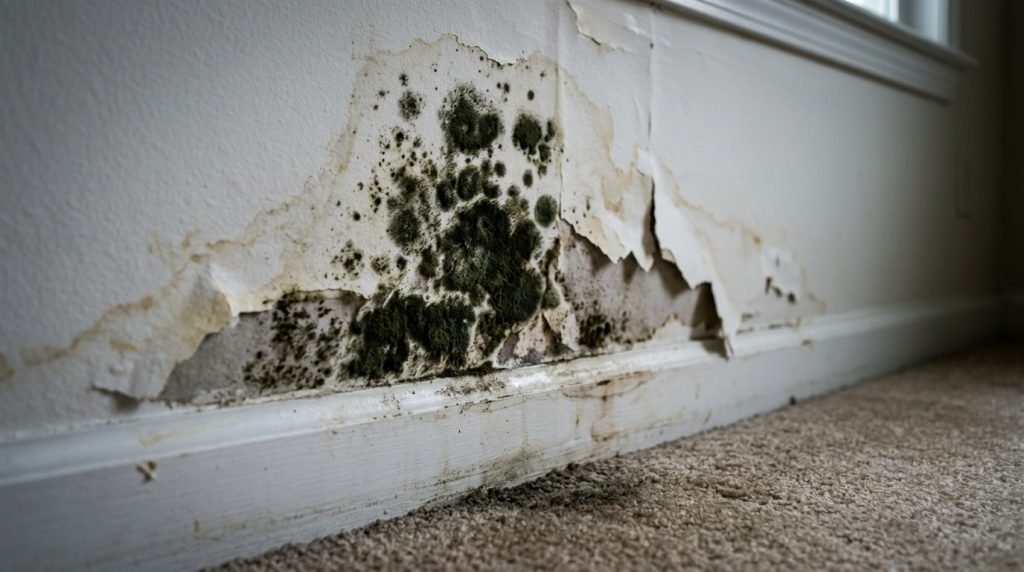


The short version for homeowners staring at a wet ceiling or a moldy crawlspace:
- Most water and mold damage is covered by homeowners insurance when it comes from a sudden event (burst pipe, storm, appliance failure)
- Out-of-pocket usually stops at your deductible, often a few hundred to a couple thousand dollars
- Slow leaks ignored over months are the main exception, those tend to fall on you
- Charlotte’s humidity makes mold a near-guaranteed follow-up if water sits more than a day or two
- The bigger driver of cost is not the bill, it’s how fast you call. Hours matter
Here’s the part most homeowners don’t know. Restoration pricing is built on a standard scale called IICRC, which sorts water by category (clean supply line, gray water, sewage backup) and damage by class (one room versus structural soak through multiple floors). Your insurance adjuster knows this scale, your contractor knows this scale, and the two negotiate against it. The actual dollar amount lands wherever your specific category and class fall, but the ballpark is almost always in the low-to-mid four figures for a contained event and into five figures for whole-home or contaminated water.
Mold is its own line item. A small visible patch under ten square feet can be handled quickly. Anything larger, especially in a crawlspace or attic, needs containment so spores don’t spread to the rest of the home. This is why we never recommend pulling out a shop vac and doing it yourself. The repair cost almost always outweighs the saved labor, and you can void parts of your insurance claim by disturbing the affected area.
Timeline matters more than dollars in our experience. The typical sequence runs:
- 1 to 3 hours for an inspection and moisture map
- 3 to 5 days of active drying with commercial dehumidifiers and air movers
- 1 to 2 days of sanitizing and antimicrobial treatment
- 3 days to several weeks for the rebuild work, depending on how much drywall and flooring is involved
Insurance pays best when documentation is strong. Take photos of everything before any cleanup begins. Save the date and time. Get the source of the leak shut off. Then pick up the phone.
That’s where we come in. Statewide Restoration is local to Charlotte, IICRC certified, and we work directly with your insurance adjuster so you’re not stuck translating restoration jargon into a claim. We’ve handled everything from kitchen flood overnights to whole-home post-storm rebuilds across the metro area.
If you have water on the floor or a mold smell you can’t track down, call us at (704) 559-9922 or email info@swresto.com. We’ll come look the same day in most cases. No pressure, just a clear scope and a real number you can take to your insurance.
Frequently Asked Questions
What factors explain how water damage restoration costs are determined?
The bill comes down to two things: the IICRC water category (clean supply line, gray water, or sewage) and the damage class (one room or structural soak across multiple floors). Your contractor and your insurance adjuster both work from that scale, so the price is less of a guess than people expect. The other big factor is response time. Hours matter, days hurt.
Does homeowners insurance cover water damage restoration services?
Yes for sudden events like burst pipes, storm damage, or appliance failures. The piece you usually pay is the deductible. The exception is slow leaks that sat undetected for months. Those are typically excluded, which is why catching the source early protects both your home and your claim.
Why is professional mold remediation more expensive than DIY methods?
A pro brings containment, HEPA air filtration, and the certifications insurance wants to see. A shop vac in a moldy crawlspace tends to spread spores into the rest of the house, which turns a small job into a big one. It can also void the part of your claim that pays for repairs, so the saved labor cost shows up later, doubled.
How quickly should homeowners contact a professional for water damage?
The first 24 hours change everything. Standing water moves up the IICRC category scale every few hours, mold starts inside two days in Charlotte’s humidity, and structural materials lose their integrity once they pass a moisture threshold. Call as soon as the source is shut off, even if you’re not sure how bad it is.