
Key Takeaways
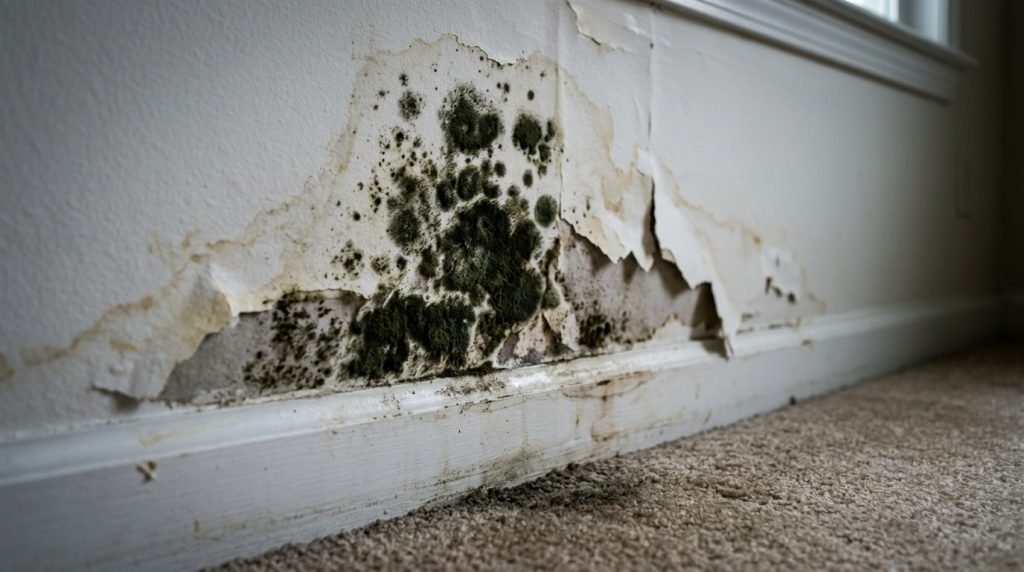
- Water damage requires professional intervention within 24 to 48 hours to prevent secondary structural mold growth.
- The restoration process follows a predictable sequence including assessment, extraction, drying, cleaning, and final structural repair.
- IICRC certification is the industry standard for verifying the technical competency of a restoration company.
- Emergency response time is a critical factor in minimizing the total cost and scope of property damage.
- Homeowners should verify contractor licenses and insurance to ensure legal and financial protection during the remediation project.
Finding water where it shouldn’t be is a stomach-drop moment. Whether it’s a burst pipe at 2 AM, a washing machine failure, or storm water pushing through a foundation crack, the first thing most people do is panic. The second thing they do is Google.
That’s understandable. But the clock starts the minute the water does. Charlotte homeowners often spend hours trying to figure out what to do when they should be making one call. This guide answers the questions you’re most likely asking right now.
Managing the Risks of Water Damage in Charlotte Residential Properties
Water damage restoration is the professional process of removing unwanted water, drying structural materials, and repairing property damage caused by incidents like burst pipes or flooding. This process utilizes specialized moisture-detection tools and industrial-grade extraction equipment to mitigate secondary damage such as mold growth or structural rot. Prompt professional intervention is critical because water begins compromising building materials and fostering microbial growth within 24 to 48 hours.
Understanding the Five Phases of the Water Damage Restoration Process
There’s no universal timeline for water damage restoration because no two situations are the same. A bathroom floor with a slow leak behind the toilet takes far less time to restore than a basement that held four inches of water for three days. What you can count on is a predictable sequence of steps.
Phase 1: Initial Assessment and Property Inspection
A certified restoration technician identifies the water source and uses moisture meters to map the migration of water through the property. This is not a visual check. Moisture hides inside walls, under subfloors, and behind cabinets.
Phase 2: Professional Water Removal and Extraction
Truck-mounted extraction units remove standing water rapidly to prevent the structure from absorbing excess moisture. The faster this step happens, the less damage the structure absorbs. Time lost here shows up later as torn-out drywall and flooring that could have been saved.
Phase 3: Structural Drying and Dehumidification
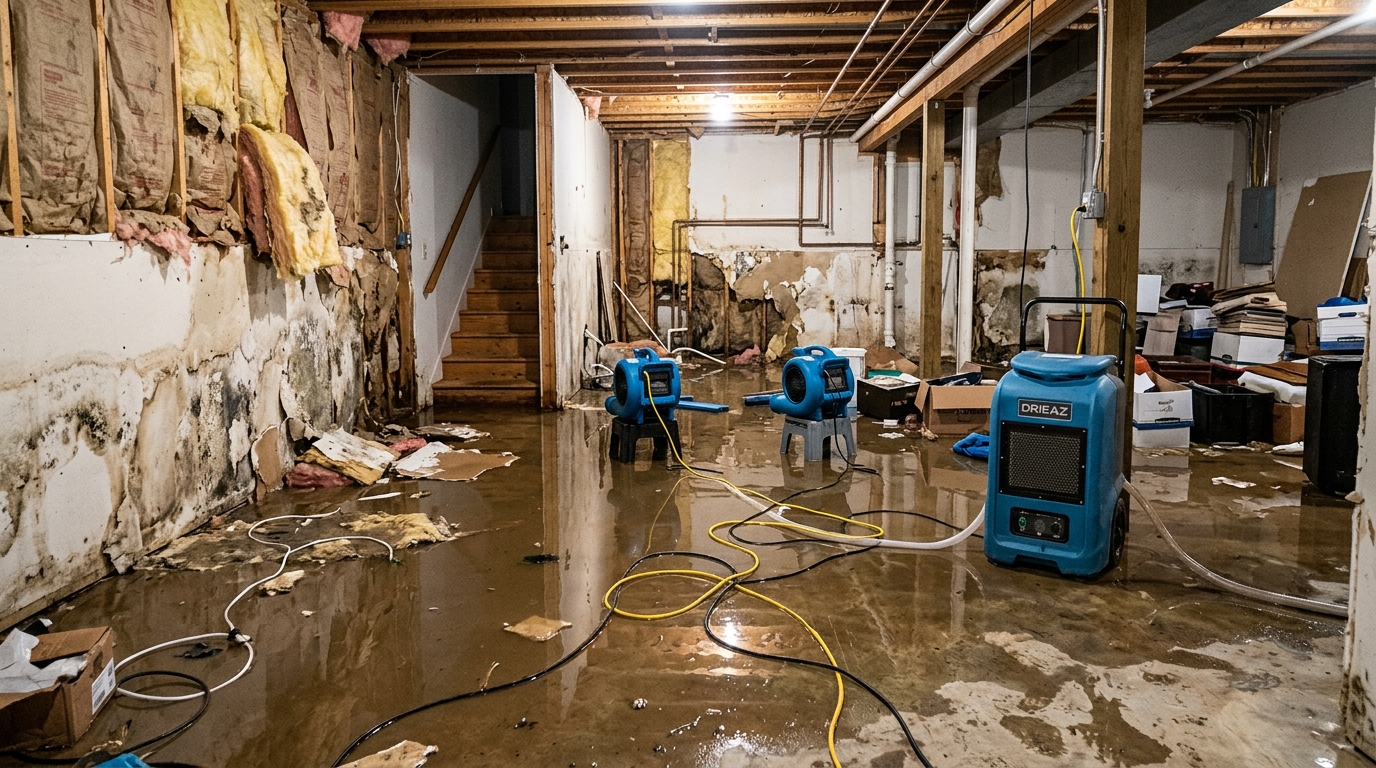
This is the phase most homeowners underestimate. Industrial air movers and commercial dehumidifiers run for days. They pull moisture out of materials that still look and feel dry. You cannot replicate this with household fans, and that distinction matters.
Phase 4: Cleaning, Sanitizing, and Antimicrobial Treatment
Any surface that held water gets treated. Category 2 (gray water from appliances) and Category 3 (black water from sewage or flooding) require antimicrobial treatment to prevent mold and contamination from taking hold.
Phase 5: Final Property Restoration and Structural Repair
Once everything is confirmed dry, damaged materials get repaired or replaced. Drywall, flooring, insulation, sometimes structural framing. The extent of this step depends entirely on how fast the earlier steps happened.
Total timeframe: minor incidents can resolve in three to five days. Significant flooding with compromised structural materials may take two to four weeks. Statewide Restoration gives homeowners a realistic estimate after the initial inspection, not a vague range designed to manage expectations.
Why Rapid Response Time Is Critical for Water Damage Mitigation
Water damage does not stabilize on its own and requires active mitigation to prevent progressive deterioration. Every hour the water sits, it absorbs into more material. After 24 to 48 hours, conditions for mold growth are in place. After 72 hours, structural materials that could have been dried may need to be torn out and replaced entirely.
Emergency water damage services in Charlotte should respond with a live person picking up the phone immediately, and a technician on site within a few hours. Industry standard for emergency dispatch runs two to four hours, though it varies by company and time of call.
In the restoration industry, emergency response means the immediate arrival of a crew equipped with extraction tools to begin water removal, not a scheduled assessment appointment scheduled for later in the week.
Statewide Restoration operates with the understanding that delayed starts cost homeowners more money and more structure. If you call and get a voicemail or a callback window measured in days, call someone else.
How to Choose a Qualified Water Damage Restoration Company in Charlotte
Charlotte has no shortage of restoration companies, and after a regional storm that number grows fast. Pop-up crews with pickup trucks and residential wet-vacs show up, take deposits, and sometimes disappear. Out-of-state contractors appear after hurricanes and are gone before the final bill is settled. Here’s how to separate legitimate companies from the rest.
The Importance of IICRC Certification for Restoration Technicians
The Institute of Inspection, Cleaning and Restoration Certification sets the industry standards for water damage work. A company without IICRC-certified technicians is not operating to the same standards as one that does. Ask for certification numbers. A real company will have them ready.
How to Verify Restoration Contractor Licenses and Insurance
Ask for their contractor’s license number and verify it with the North Carolina Licensing Board for General Contractors at nclbgc.org. Ask for a certificate of liability insurance. A legitimate company will hand both over without hesitation. If they push back, walk away.
Evaluating a Restoration Company’s Local Reputation and History
How long have they operated in Charlotte? Do they have Google and BBB reviews that go back more than six months? A company with a hundred five-star reviews from the past two weeks is worth scrutinizing before you sign anything.
Statewide Restoration is based in Charlotte and has worked with homeowners across the region on water, fire, and mold remediation. When you’re vetting any company, the question to ask is: how many restoration jobs have you completed in this area, and can you show me references?
Common Homeowner Mistakes to Avoid After Water Damage
Mistake 1: Delaying Professional Water Damage Mitigation
The most expensive decision after water damage is usually deciding to wait until morning, or until after the weekend, or until you can figure out what it’s going to cost. The damage doesn’t wait. Water migrates. It finds every seam, every gap, every unfinished edge. What costs $8,000 to restore today could be $20,000 by next week.
Mistake 2: Using Non-Commercial Drying Equipment
Box fans and hardware store dehumidifiers are not restoration equipment. They move surface air and pull some moisture from the room. They do not have the CFM output to dry out wall cavities or penetrate subfloor assemblies. Using them feels like doing something. It is not doing enough.
Mistake 3: Underestimating Hidden Moisture and Structural Damage
The floor feels dry. The walls look fine. The damage is probably not that bad. This assumption is wrong more often than it’s right. Moisture meters routinely find elevated readings in materials that look and feel completely dry to the touch. The only way to know if it’s actually dry is to measure it with the right equipment.
The right move after water damage is simple: call a certified restoration company and let them assess it. Statewide Restoration offers inspections for Charlotte homeowners. You’ll know what you’re dealing with before you decide anything, and you won’t be guessing.
How long does the water damage restoration process take in Charlotte?
It depends on the extent of the damage, what materials got wet, and how quickly professional work started. Minor incidents typically resolve in three to five days. Significant flooding can take two to four weeks. Statewide Restoration provides a realistic estimate after the initial inspection.
What should I do immediately after discovering water damage?
Turn off the water source if you can find it. Move valuables out of the affected area. Call a certified restoration company. Do not wait. Every hour adds moisture penetration and increases the risk of mold taking hold in your walls and floors.
Does Statewide Restoration handle emergency water damage calls in Charlotte?
Yes. Statewide Restoration serves Charlotte and surrounding areas with emergency water damage response. A technician can be on site within hours of your call with the equipment to start extraction immediately.
How do I verify a restoration company is licensed and insured in North Carolina?
Look up their contractor’s license on the North Carolina Licensing Board for General Contractors website at nclbgc.org. Ask for a current certificate of liability insurance. Any reputable company will provide these without pushback.
Can I handle water damage restoration myself?
Surface cleanup, yes. Structural drying, no. Without commercial drying equipment and moisture monitoring, you cannot confirm the structure is actually dry. Incomplete drying leads to mold inside walls and floors, which costs significantly more to remediate than the original water damage would have.