
Mold can start growing within 24 to 48 hours after water damage in Charlotte’s humid climate, often before you see or smell anything. Knowing what to look for, when to leave the house, and how to keep your family safe during cleanup can make a real difference.
Here is what Charlotte homeowners need to know about mold safety and detection:
- Visible mold is often just the surface, with hidden growth behind drywall and under flooring causing deeper damage.
- Musty odors and unexplained respiratory symptoms are early warning signs that often show up before visible mold does.
- Whether you can stay home during remediation depends on the scope of the work.
- Families with children should confirm safe cleanup methods before any work begins.
- Rapid response to water damage limits how far mold spreads and reduces restoration costs.
How to Detect Mold After Water Damage
Look for these warning signs:
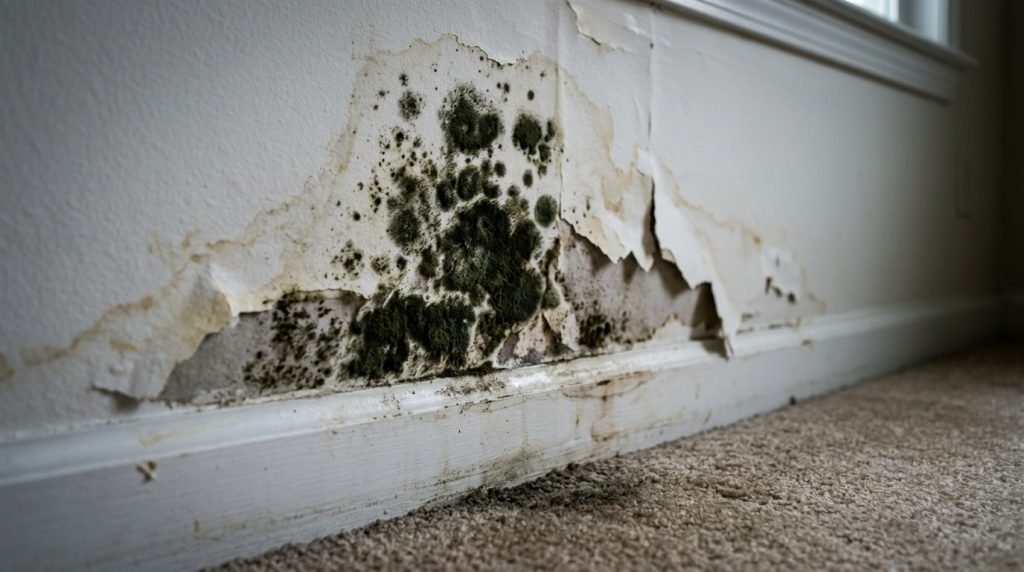
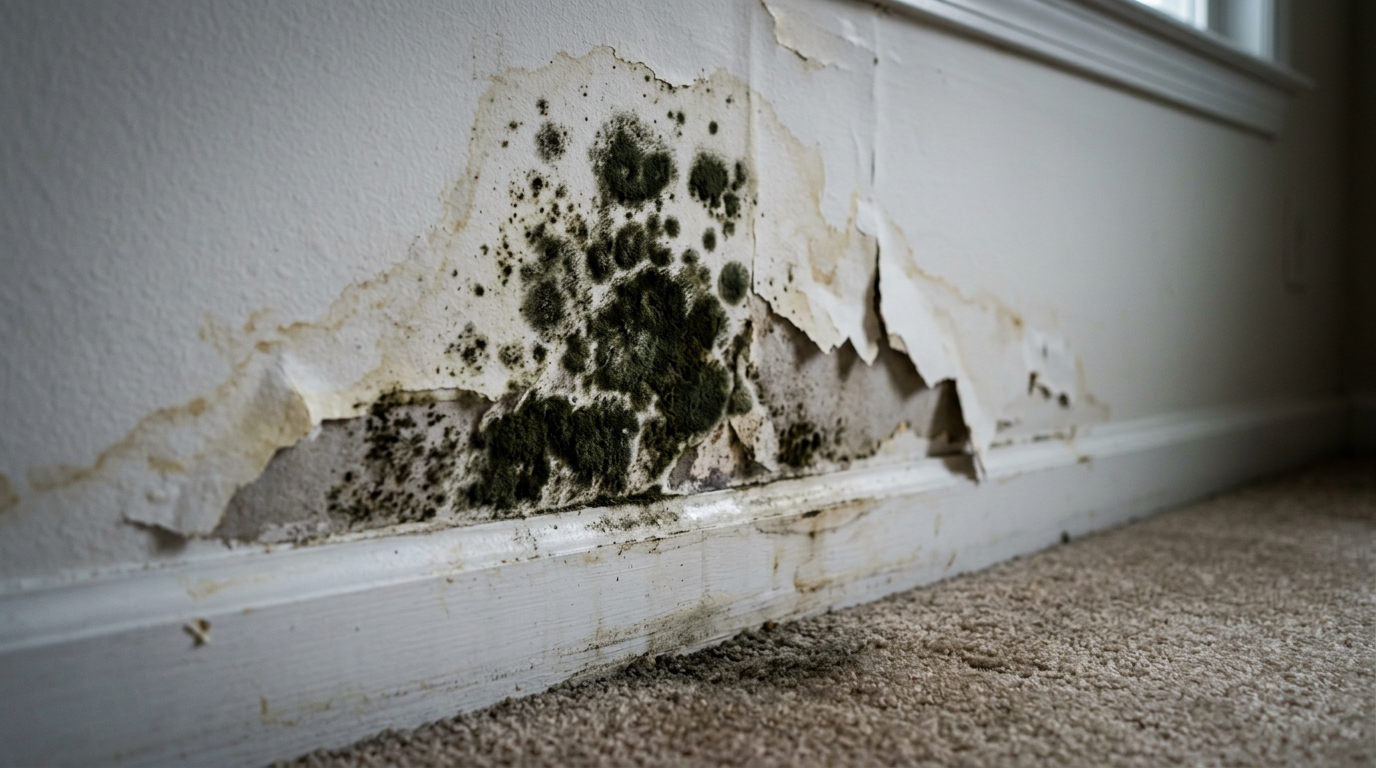
Visible growth: Black, green, gray, or white patches on walls, ceilings, or baseboards. Any discoloration that appeared after water damage deserves a closer look.
Musty odor: A persistent earthy smell, especially in basements and crawl spaces, is a reliable early indicator even when nothing is visible yet.
Persistent dampness: Swollen wood, bubbling paint, or surfaces that never fully dry point to trapped moisture and likely mold beneath.
After a flood: If your home had standing water for more than 24 to 48 hours, get a professional assessment even without visible mold. By the time it shows up, it has usually spread beneath the surface.
Signs of Hidden Mold That Need Professional Remediation
Hidden mold grows inside wall cavities, under flooring, and in HVAC systems. Watch for:
- Allergy or respiratory symptoms that improve when you leave the house
- Recurring coughing or sneezing, especially in children or elderly residents
- Soft spots or new discoloration on walls after water damage
- Mold that returns shortly after surface cleaning
A certified restoration company uses moisture meters and air quality testing to confirm the extent of hidden growth before starting work.
Safe Remediation Methods for Households with Children
Before hiring anyone, ask what methods they use. Safe professional remediation includes: containment with plastic sheeting and negative air pressure; HEPA air scrubbers to capture airborne spores; appropriate cleaning agents with low chemical exposure; and a post-clearance air quality test before your family returns.
Statewide Restoration follows IICRC-certified protocols to protect your household throughout every step.
Can You Stay Home During Mold Remediation?
For small, contained jobs, staying home with proper containment in place is usually fine. For larger projects involving HVAC systems or multiple rooms, temporary relocation is the safer choice. Your contractor should address this directly before work begins, especially if anyone in the household has asthma or allergies.
Ready to Schedule an Assessment?
Do not wait for visible mold to take action. If your home had water damage, or if you notice any of the signs above, a professional assessment is the right call.
Call Statewide Restoration at (704) 559-9922 or email info@swresto.com. We serve Charlotte and the surrounding area and are here when you need us.
Frequently Asked Questions
How do I know if my home has mold after water damage?
Look for visible patches, persistent musty odors, or moisture signs like bubbling paint. A professional assessment using moisture meters and air quality testing is the most reliable way to find hidden growth behind walls or under floors.
How quickly can mold grow after water damage?
Mold can begin developing within 24 to 48 hours, especially in Charlotte’s humid summers. Acting quickly after any leak or flood limits how much grows before treatment starts.
Does insurance cover mold remediation in North Carolina?
If mold resulted from a covered event like a burst pipe or storm flood, your homeowner’s policy may cover some or all of the cost. Mold from long-term neglect is typically excluded. Statewide Restoration helps homeowners document damage for insurance claims.
How long does mold remediation take?
Most residential projects take one to five days depending on the size and materials involved. Your contractor should give you a specific timeline during the initial assessment.