
If you noticed a musty smell coming from your floors or moisture pooling under your home, your crawl space likely has a water problem. In Charlotte, where heavy rain and clay-heavy soil are common, crawl space flooding is one of the most overlooked issues that quietly causes serious damage.
Here is what Charlotte homeowners need to know:
- Standing water can appear within hours of a heavy rain
- Mold begins growing in a wet crawl space within 24 to 48 hours
- Crawl space air circulates into your living areas, carrying mold spores with it
- Most homeowner policies cover sudden water intrusion, so documentation matters
- Professional restoration is the only reliable way to fully dry and repair the space
Common Signs of Crawl Space Water Damage and Moisture Intrusion
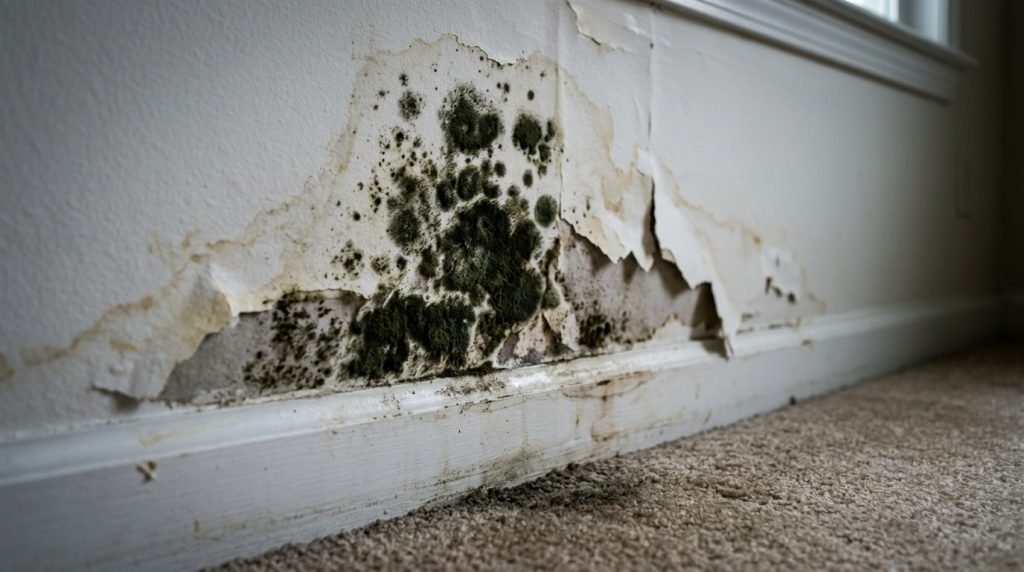
Common signs include a persistent musty smell inside the home, visible mold or dark staining on wood joists, wet or sagging insulation, white mineral deposits on concrete walls, standing water or damp soil, wood rot on the subfloor, and a rise in pests like termites drawn to moisture. If you notice any of these, do not wait. Crawl space water damage compounds quickly, leading to structural degradation and health risks.
Primary Causes of Crawl Space Flooding in Charlotte, NC
Charlotte’s red clay soil has low permeability, which causes rainwater to pool near foundations rather than absorbing into the ground. Common causes include poor yard grading that directs water toward the house, clogged gutters, plumbing leaks from pipes under the floor, foundation cracks, and condensation from warm humid air meeting cooler crawl space surfaces.
Health Risks Associated With Crawl Space Mold and Standing Water
Standing water in a crawl space facilitates rapid mold growth. Mold needs only moisture, a food source, and temperatures above 50 degrees. The stack effect describes how air rises from the crawl space into the living areas of a home, carrying mold spores and high humidity with it. Prolonged exposure causes respiratory irritation, allergy and asthma flare-ups, and fatigue. For children, the elderly, and anyone with lung conditions, the risks are more serious.
The Professional Crawl Space Water Damage Restoration Process
A licensed restoration company inspects the space, extracts water with submersible pumps, runs industrial dehumidifiers to reach safe moisture levels, sanitizes surfaces, and removes materials that cannot be saved. If mold is detected, remediation follows IICRC (Institute of Inspection, Cleaning and Restoration Certification) standards. Many crawl spaces also benefit from a vapor barrier, a thick plastic liner installed over the soil to block ground moisture. Insurance typically covers sudden intrusion events, and Statewide Restoration works directly with adjusters to document damage and move claims forward.
Immediate Steps to Take When Discovering Crawl Space Water Damage
Do not enter a flooded crawl space if there is any electrical risk. Turn off power at the breaker first, stop the source if obvious, and call a restoration company before running fans or heaters since improper drying spreads mold spores. Photograph all affected areas before moving anything. That documentation is essential for your insurance claim.
Common mistakes to avoid: waiting because it does not seem that bad, using a shop vac and calling it done, or skipping a mold check after drying.
Frequently Asked Questions
How quickly can mold grow in a wet crawl space?
Mold can begin colonizing within 24 to 48 hours. Charlotte’s summer humidity makes it even faster, and spores can reach living areas through the natural stack effect.
Does homeowner’s insurance cover crawl space water damage?
Sudden events like a burst pipe or storm flooding are typically covered. Gradual leaks often are not. Statewide Restoration can help you document the damage and work with your adjuster.
Can I dry a crawl space myself?
You can pump out standing water, but reaching safe moisture levels requires industrial dehumidifiers. DIY drying often leaves hidden moisture that leads to mold weeks later.
What is a vapor barrier?
A thick plastic liner installed over the crawl space floor to block ground moisture from rising into the space. Most Charlotte homes benefit from one given the local soil and humidity.
Call Statewide Restoration at (704) 559-9922 or email info@swresto.com. We serve Charlotte and surrounding areas and can be on-site quickly to assess and start recovery.