
Key Takeaways
- Fire and smoke damage restoration typically takes 2 to 8 weeks, depending on the severity and what materials were affected.
- You can prepare your home by documenting damage, contacting your insurance carrier, and securing the property before restoration starts.
- Professional soda blasting, ozone treatment, and thermal fogging are the most effective ways to remove deep smoke odor.
- Most belongings, including furniture, clothing, documents, and electronics, can be restored if treated quickly by trained technicians.
- Acting within the first 24 to 48 hours dramatically improves what can be saved and reduces total restoration costs.
Understanding how fire and smoke damage restoration works is essential for Charlotte homeowners facing property recovery after a fire event. This guide outlines the professional processes used to restore homes and salvage personal belongings effectively.
How Fire, Soot, and Smoke Residue Impact Residential Properties
Fire and smoke damage restoration is the professional process of cleaning, repairing, and deodorizing a property after a fire event. This restoration mechanism involves stabilizing the structure, removing corrosive soot residues, and neutralizing smoke odors trapped in building materials. Timely restoration is critical because acidic soot and smoke particles begin damaging surfaces and indoor air quality immediately after a fire is extinguished.
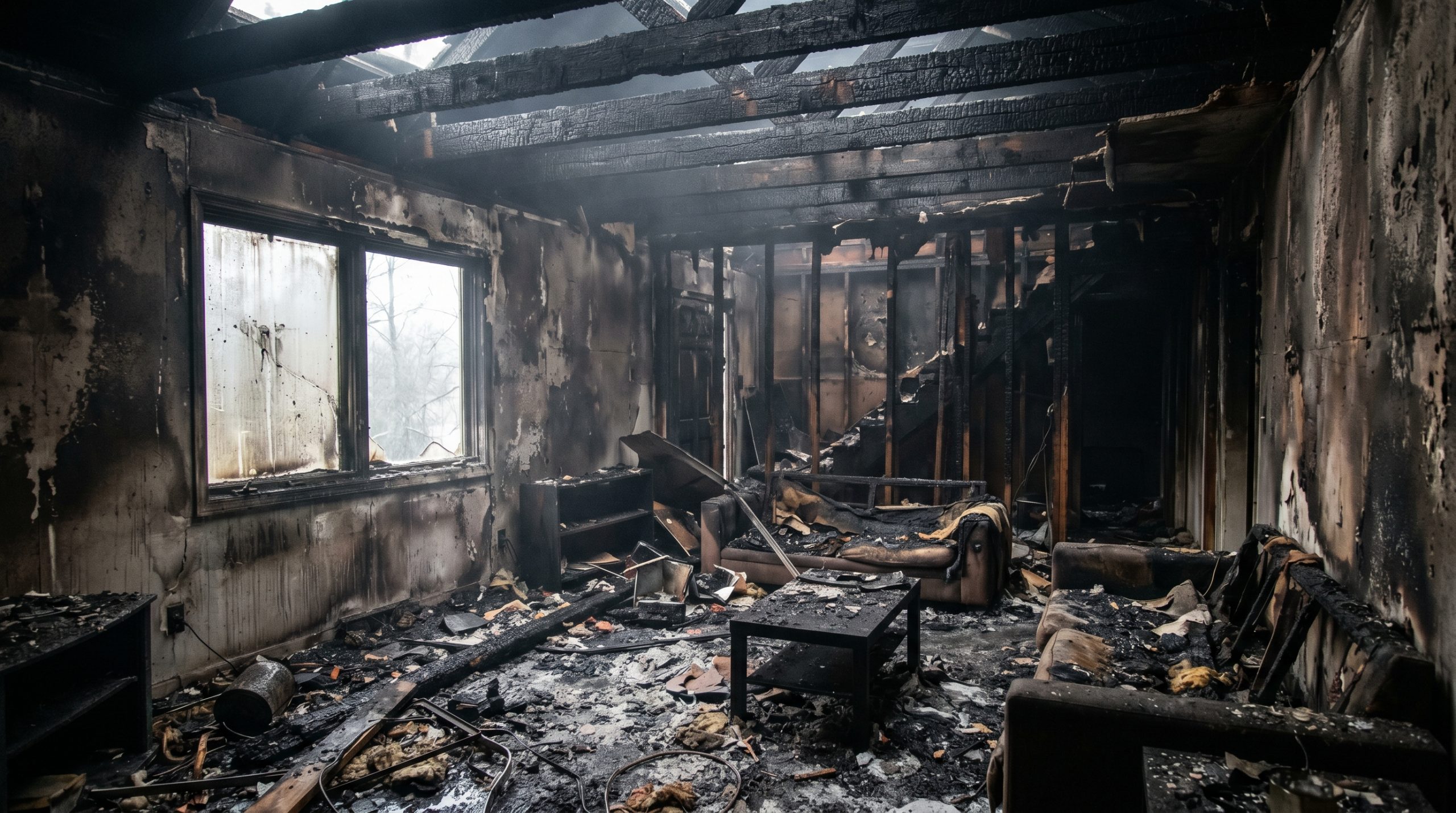
A residential fire does not need to consume an entire structure to cause significant property damage. Even a small kitchen fire or a contained blaze in one room leaves behind smoke, soot, and corrosive residues that spread fast. Within hours, soot deposits on walls, ceilings, and HVAC vents. Smoke seeps into soft materials — upholstery, carpets, clothing, bedding. Acidic residue from combustion starts eating into painted surfaces and metal fixtures.
Charlotte homeowners often underestimate what happens in the days after the fire is out. The visible char is the obvious part. Incomplete restoration often results in persistent smoke odors caused by microscopic particles trapped in drywall, subflooring, and ductwork. Statewide Restoration provides certified fire and smoke damage restoration services for Charlotte homeowners 24/7.
The Seven-Step Professional Fire Damage Restoration Process
Restoration after a fire follows a clear sequence. Knowing the steps helps you manage expectations and understand what your contractor is doing and why.
Emergency Board-Up and Securing the Property
If windows are broken or walls are compromised, the first move is boarding up and tarping to prevent weather intrusion, theft, and further damage. Statewide Restoration dispatches emergency response teams within hours to stabilize the property.
Damage Assessment
A certified restoration team walks every room, documents affected materials, and identifies what can be cleaned versus what needs to be removed. This detailed assessment report serves as essential documentation for your homeowners’ insurance claim.
Water Extraction (if applicable)
If a property was hosed down during firefighting efforts, water extraction and structural drying must occur simultaneously with fire and smoke cleanup. Skipping this leads to mold within days.
Soot and Smoke Residue Removal
Dry soot on walls gets vacuumed before it’s wiped. Wet or oily soot from plastics and synthetics requires chemical sponges and degreasing agents. The type of fire determines what cleaning method is used.
Structural Repairs
Charred framing, damaged drywall, and compromised insulation get removed and replaced. In severe cases, portions of the roof or load-bearing structure may need rebuilding.
Odor Elimination
Professional deodorization is performed after structural repairs and deep cleaning are complete to ensure all odor sources are addressed. See the smoke odor section below.
Final Restoration and Repainting
The final restoration phase returns the home to its pre-loss condition through the installation of new drywall, paint, flooring, and fixtures.
The timeline for restoration varies: a minor fire with localized smoke damage might take 2 to 3 weeks, while a major fire involving structural components typically requires 6 to 8 weeks. Statewide Restoration provides a written scope of work with estimated timelines before any restoration work begins.
How Contents Restoration Saves Personal Property and Household Belongings
Professional contents restoration can often salvage more items than homeowners expect, provided the mitigation process begins within 24 to 48 hours.
Furniture: Upholstered or hardwood furniture can often be restored if the item is structurally sound and has not been directly charred by flames. Specialized equipment is used to remove smoke odor and surface soot.
Clothing and Textiles: Ozone chambers and ultrasonic cleaning systems are effective on most fabrics. Heavily saturated items may not come back fully. A contents restoration specialist can evaluate item by item.
Documents and Photos: Air-drying and dehumidification can stabilize documents within hours. Smoke-damaged photos can sometimes be digitally restored even when the physical copy is a loss.
Electronics: Smoke and soot are corrosive to circuit boards. Electronics should never be powered on after a fire. Statewide Restoration provides an itemized assessment of salvageable electronics before beginning the cleaning and testing process.
What doesn’t survive: Direct fire contact, melted plastics, and items soaked with firefighting chemicals for extended periods are usually total losses. Statewide Restoration’s team will give you an honest, itemized assessment of what can be saved before any work begins.
The difference between saving belongings and losing them often comes down to 24 to 48 hours. Getting a restoration crew on-site fast is not just about the structure.
Steps for Homeowners to Prepare for Professional Fire Damage Restoration
Homeowners can take specific steps before a restoration crew arrives to improve the recovery outcome.
Document everything first. Walk through with your phone and video every room. Open every closet. Photograph your belongings before anything is moved or touched. This is critical for your insurance claim.
Contact your insurance carrier immediately. Get your claim number, understand what’s covered, and ask whether they require you to use a specific network of restoration contractors. Some policies have preferred vendors. Know this before you sign a contract.
Don’t run the HVAC system. Running your air conditioning or heat after a fire circulates soot particles and smoke residue through every vent in the house. Turn it off and leave it off until the restoration crew has cleaned the ductwork.
Homeowners should open windows in unaffected rooms to begin ventilating smoke odors, provided it is safe to do so. Don’t open windows in heavily damaged rooms where debris could be disturbed.
Don’t throw anything away yet. Even items that look ruined may be salvageable, and your insurance claim depends on documented losses. Let the team assess before you start discarding.
Statewide Restoration works directly with insurance adjusters on Charlotte claims and can help you navigate the documentation process from day one.
Advanced Techniques for Professional Smoke Odor Removal and Deodorization
Smoke odor is often the most persistent challenge following a residential fire. It penetrates porous materials — drywall, wood framing, insulation, carpet padding — and doesn’t go away on its own. Standard air fresheners and ventilation are ineffective against deeply embedded smoke odor molecules.
Here’s what professional restoration actually uses:
Ozone Treatment: Ozone generators produce O3, which oxidizes smoke particles at the molecular level. Effective for rooms and soft furnishings, but requires the space to be evacuated during treatment.
Thermal Fogging: A thermal fogger heats a deodorizing solution into a fog that penetrates the same microscopic pores smoke reached. It mimics how smoke spreads, but in reverse. One of the most thorough methods available.
Soda Blasting: For char and soot on wood framing and structural surfaces, soda blasting uses sodium bicarbonate under pressure to clean surfaces without damaging the substrate. It also leaves a deodorizing residue.
Hydroxyl Generators: These use UV light to produce hydroxyl radicals that break down volatile organic compounds in the air. They can run while occupants are present and are often used during extended projects.
HVAC Duct Cleaning: The HVAC system distributes smoke throughout the house. Professional duct cleaning and replacement of the air filter media is required before the system runs again.
Statewide Restoration uses a combination of these methods depending on the specific fire conditions, materials involved, and extent of the odor penetration — not a one-size-fits-all approach.
Frequently Asked Questions
How long does fire and smoke damage restoration typically take?
Most residential fire damage restoration takes between 2 and 8 weeks. A small, localized fire may be resolved in 2 to 3 weeks. Larger fires involving structural components or permit work can take 6 to 8 weeks or more. Statewide Restoration provides a written scope and timeline before work begins.
What is the best way to remove smoke odor from a house?
The most effective methods are thermal fogging, ozone treatment, and soda blasting for structural surfaces. These approaches reach the same microscopic pores the smoke penetrated. Surface-level cleaning and air fresheners do not eliminate embedded odor. The HVAC ductwork must also be cleaned, or odor will recirculate every time the system runs.
How do I prepare my home for fire damage restoration?
Document all damage on video before anything is moved. Contact your insurance carrier and get your claim number. Turn off the HVAC system to prevent soot from spreading through the ducts. Don’t discard any damaged items before the restoration team documents them. Statewide Restoration can walk you through this process.
Can fire and smoke damage restoration save my belongings?
Yes, understanding how fire and smoke damage restoration works reveals that many items can be saved if treatment starts within 24 to 48 hours. Furniture, clothing, documents, and electronics can frequently be restored. Items that were directly burned or melted are typically total losses. Specialists evaluate items individually for recovery.