
Key Takeaways:
- Mold can begin growing within 24 to 48 hours after water damage occurs in a Charlotte home
- Common signs of post-flood mold include visible discoloration, musty odors, and worsening allergy symptoms
- Professional mold remediation is necessary when mold covers more than 10 square feet or when it has spread to HVAC systems
- Water damage restoration completed within 24 to 72 hours dramatically reduces the risk of mold growth
- DIY cleanup methods may miss hidden moisture pockets, making professional assessment essential
Mold growth after water damage is the rapid colonization of fungal spores on organic building materials following a water intrusion event. In Charlotte’s humid subtropical climate, this colonization occurs when moisture and warm temperatures allow spores to germinate and spread within 24 to 48 hours. Understanding how to detect mold early and utilizing professional water damage restoration can save homeowners from extensive structural repairs and significant health risks. Learning how to prevent mold after water damage is essential for maintaining a safe and healthy living environment.
The Relationship Between Water Damage and Mold Growth
Mold requires three conditions to thrive: moisture, a food source, and the right temperature. After water damage, your home provides all three. Drywall, wood framing, carpet, and insulation all serve as organic food sources for mold. Charlotte’s average humidity and warm seasonal temperatures accelerate germination and growth.
The first 24 to 48 hours after a water intrusion event represent the critical window for preventing mold colonization. Materials that remain wet beyond this point face a dramatically higher risk of supporting active mold colonies. This is why rapid extraction and structural drying are not cosmetic concerns but critical steps for protecting your home and your family’s health.
Floodwater and storm water carry additional contamination risks. Water classified as Category 2 (gray water from appliances or overflows) or Category 3 (black water from sewage or external flooding) introduces bacteria and organic material that accelerates mold development and creates additional health hazards beyond the mold itself.
How to Detect Mold Growth Following Water Damage
Detection of mold is often straightforward once colonies have matured, but early identification requires monitoring for subtle changes beyond obvious dark patches on walls or ceilings.
Visual Indicators of Mold Contamination
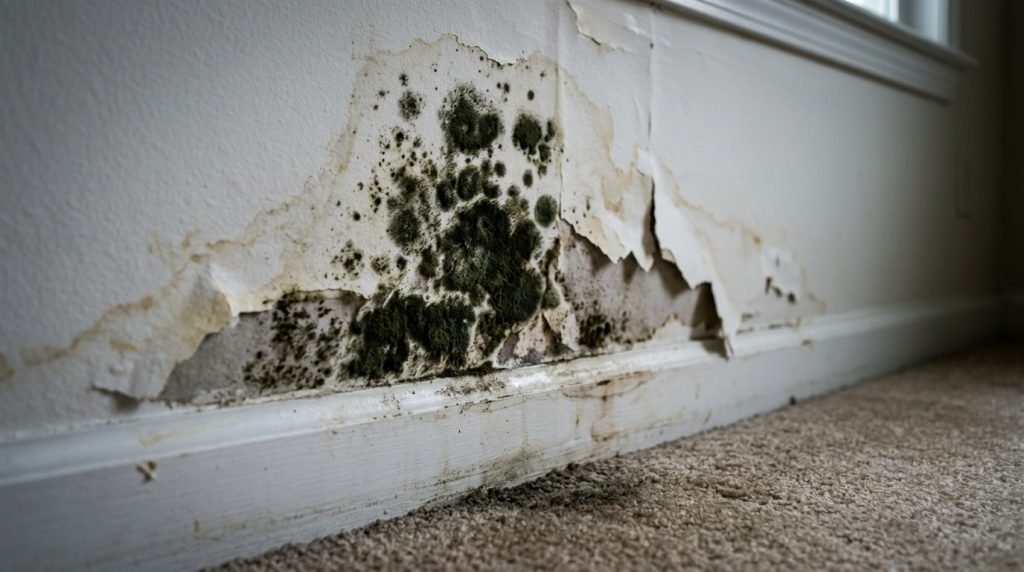
Mold growth appears in a range of colors, including black, green, gray, white, and orange, often presenting as fuzzy or slimy patches on surfaces that remained wet the longest. Common locations include: under flooring and behind baseboards, inside wall cavities near plumbing, beneath cabinets in kitchens and bathrooms, in corners where air circulation is limited, and along ceiling seams where roof leaks traveled.
Even painted drywall can show early mold through bubbling, warping, or staining that bleeds through the surface. Discoloration that does not wipe clean is a reliable early indicator.
Odor and Health Symptoms Associated with Mold
A persistent musty or earthy odor is one of the most reliable early warning signs of hidden mold growth. Mold produces microbial volatile organic compounds (MVOCs) during metabolism, and these compounds carry a distinctive odor even when visible growth is not yet apparent.
Health symptoms that worsen inside the home but improve upon leaving can signal the presence of mold spores. Respiratory irritation, nasal congestion, eye irritation, and skin rashes are common responses to mold exposure, particularly in children, the elderly, and individuals with allergies or asthma. If multiple household members develop similar symptoms after water damage, schedule a professional inspection promptly.
When to Schedule Professional Mold Testing and Assessment
If a property experiences significant flooding or water intrusion that remains unaddressed for over 24 hours, a professional mold assessment is advisable even when no visible mold is present. Professionals use moisture meters, thermal imaging cameras, and air quality sampling to detect mold and elevated moisture in concealed areas that cannot be inspected visually.
Criteria for Professional Mold Remediation After a Flood
Not every instance of mold requires full professional remediation, but certain conditions make it non-negotiable.
The EPA’s threshold for professional remediation is mold coverage exceeding 10 square feet, roughly a 3×3 foot patch. Beyond this size, disturbing mold without proper containment and air filtration equipment spreads spores throughout the home and significantly worsens contamination.
Professional remediation is required when:
- Mold has reached HVAC systems, ductwork, or air handlers, which can distribute spores to every room
- The water source was contaminated (Category 2 or Category 3 water from sewage backup or external flooding)
- Household members are experiencing health symptoms consistent with mold exposure
- Mold is present inside walls, under flooring, or in other concealed structural areas
- Surface cleaning was attempted and mold returned within days
For Charlotte homeowners who experienced flooding, storm damage, or extended water intrusion, professional remediation is almost always the correct response. The volume of water involved and the contact time typically exceed what DIY methods can safely address.
How Water Damage Restoration Prevents Mold Growth
Yes. Rapid, thorough water damage restoration is the most effective mold prevention strategy available after a flood or leak. Knowing how to prevent mold after water damage involves immediate action to reduce moisture levels.
The science is straightforward. Mold requires sustained moisture to germinate and grow. When structural materials are dried to acceptable moisture content (below 15% for wood, below 1% for concrete) within 24 to 72 hours, the germination process is interrupted before mold colonies can establish.
Standard Procedures in Professional Water Damage Restoration
- High-capacity water extraction using truck-mounted equipment capable of removing hundreds of gallons quickly
- Industrial desiccant or refrigerant dehumidification to pull moisture from air and structural materials simultaneously
- High-volume air movers to accelerate surface evaporation and maintain airflow through wall cavities
- Moisture mapping using meters and thermal imaging cameras to confirm no hidden moisture pockets remain
- Antimicrobial treatment applied to affected surfaces during the drying period to suppress mold growth
Statewide Restoration responds to water damage emergencies throughout Charlotte within two hours. This response time is deliberate because it represents the difference between a straightforward drying job and a mold remediation project. Every hour of delay allows moisture to migrate deeper into walls, subfloors, and insulation where it becomes progressively harder to remove.
If you return to a home after flooding and more than 24 hours have passed since the water intrusion, treat mold development as probable and request a scope that includes both restoration and mold assessment from the start.
Common Mistakes to Avoid After Residential Water Damage
Charlotte homeowners frequently make avoidable errors in the hours and days following water damage that increase both mold risk and remediation cost.
The Risks of Delaying Professional Water Damage Response
Every hour following a water intrusion event allows moisture to penetrate deeper into porous structural materials, increasing the risk of mold activation. Even after the water source is stopped, damage continues until active drying begins. Do not wait until the next business day if water damage occurs overnight or on a weekend. Statewide Restoration is available 24 hours a day, seven days a week for exactly this reason.
Limitations of Household Equipment for Structural Drying
Residential fans and dehumidifiers lack the capacity to dry structural materials to the specific moisture levels required to prevent mold germination. Residential dehumidifiers remove moisture from air but cannot extract moisture from within walls, subfloors, or insulation. Running more residential units does not replicate the performance of industrial equipment, it is a fundamentally different process with different output capacity.
Why Opening Windows Can Hinder the Drying Process
Charlotte’s summer humidity frequently exceeds 70 to 80 percent outdoors. Opening windows after water damage in humid climates can introduce additional moisture into the home, potentially reversing the structural drying process. During high outdoor humidity, keeping the home sealed and relying on mechanical drying is consistently more effective.
Why Surface Dryness Does Not Confirm Structural Restoration
Surfaces often dry faster than the underlying structural materials, such as subfloors or wall cavities. Carpet that feels dry to the touch can retain significant moisture at the subfloor level. Drywall that looks dry may have wet insulation behind it. Professional moisture testing at the conclusion of drying confirms that materials have reached acceptable content levels before equipment is removed and the project is closed.
The Necessity of Post-Drying Inspections and Verification
Once visible water is gone, it is tempting to consider the situation resolved. A professional post-drying inspection confirms that no mold growth initiated during the restoration process and that no hidden moisture pockets remain. This step is the difference between fully restoring your home and discovering a mold problem six to eight weeks later when it is larger, more expensive, and more disruptive to address.
Frequently Asked Questions
What is the best way how to prevent mold after water damage?
The most effective strategy is rapid professional water damage restoration within 24 to 72 hours. By using industrial dehumidification and moisture mapping, professionals remove moisture from structural materials, preventing the germination of mold spores that thrive in the humid Charlotte climate after a flood or pipe burst.
Does insurance cover professional mold remediation services?
Insurance coverage depends on the cause of the water damage and your specific policy. Sudden events like a burst pipe are typically covered, while long-term maintenance issues are often excluded. Statewide Restoration works directly with insurance adjusters to document damage and support claims throughout the professional mold remediation process.
How long does the mold remediation process take to complete?
The timeline for mold remediation depends on the extent of contamination. Surface mold may be addressed in one day, while larger projects involving structural materials or HVAC systems typically require three to seven days. Post-remediation verification testing ensures that the environment is safe before the project is officially closed.
Can I stay in my home during mold remediation?
In many cases, homeowners can remain in unaffected areas during the remediation process. When contamination is extensive or affects central HVAC systems, temporary relocation may be advisable. Professionals use containment barriers and negative air pressure to isolate the work area and prevent the cross-contamination of spores throughout the home.