When a storm cracks a roof line or drives water into your walls, what you do in the first hours determines whether you’re drying out a room or replacing drywall for weeks. Storm damage mitigation is the process of stopping active water intrusion, extracting standing water, and drying a structure before secondary damage like mold or warped flooring sets in. Gastonia gets its share of both: wind-driven rain in spring, straight-line wind events that lift shingles before anyone’s aware there’s a problem. Here’s how storm damage mitigation actually works.
Key Takeaways
- Mold can begin colonizing wet drywall and framing within 24 to 48 hours of a roof leak, so mitigation timing matters more than most homeowners realize.
- A rapid response within 30 to 90 minutes of an emergency call significantly limits how far storm water travels into flooring, insulation, and drywall.
- IICRC-certified drying protocols typically require monitoring moisture levels in structural materials for several days, not just one visit, to confirm a space is truly dry.
Four common entry points for storm water intrusion in Gastonia
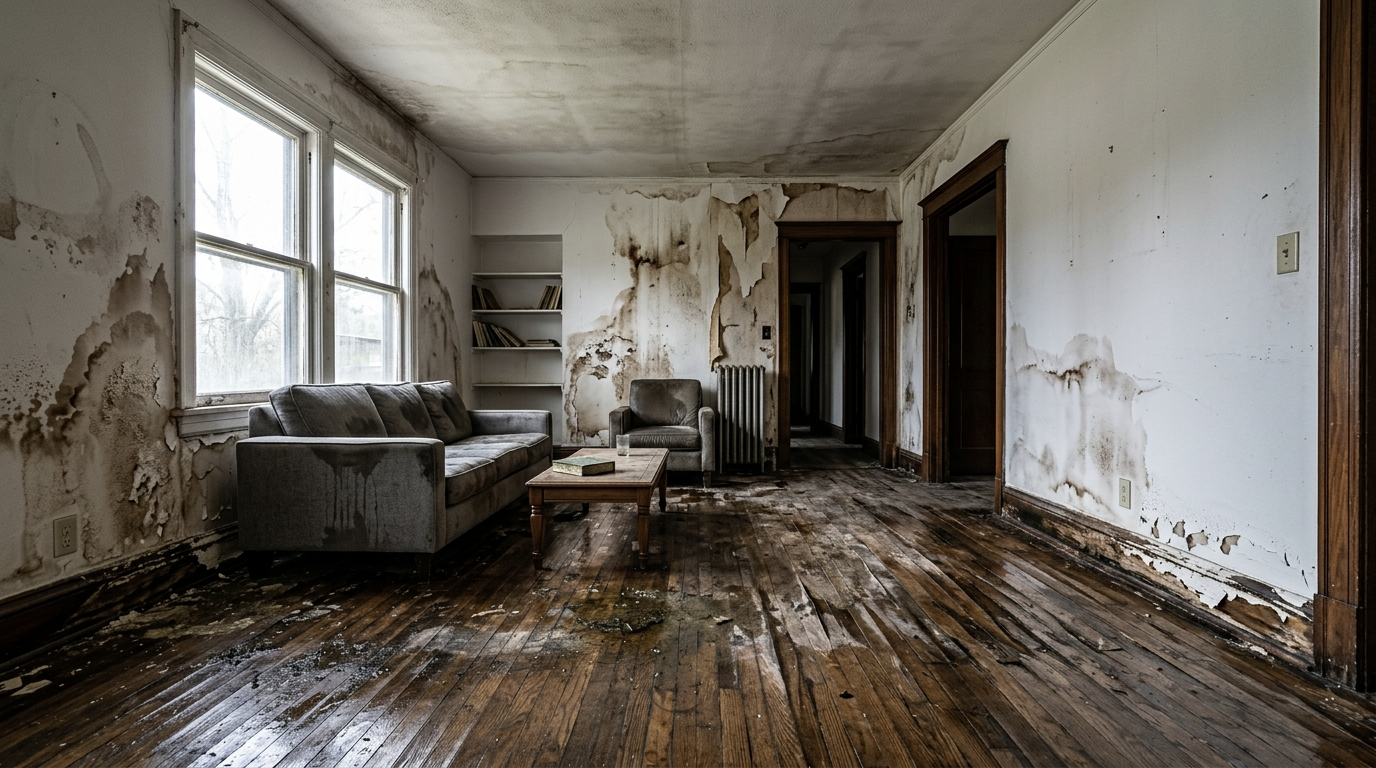
Most storm-related water intrusion in Gastonia starts at one of four places: wind-lifted shingles, damaged flashing around chimneys and roof vents, gutters that are clogged or overwhelmed by rain volume, and wind-driven rain forcing its way past window and door seals. None of these look dramatic from the ground. A shingle peeled back three inches still looks fine from the driveway. That’s the trap: roof damage often isn’t visible until you’re inside the house, staring at a ceiling stain, bubbling paint, or a musty odor in a closet that wasn’t there last week.
Water doesn’t travel straight down; it follows the path of least resistance along rafters and top plates, sometimes several feet before it shows up as a stain in a room. The visible damage is almost never the full extent of it.
Why the first 24 hours after a roof leak determine the outcome
Stop active water intrusion if it’s safe to do so, document everything with photos before anything gets moved or covered, then move into extraction and drying. Skipping the documentation step to “get ahead of it” costs people money later on their claim. Standing water and saturated materials need extraction within 24 to 48 hours before secondary damage sets in: warped flooring, delaminating drywall, and microbial growth all start on roughly that same clock.
There are hard limits on what a homeowner should attempt alone. Don’t get on a wet or wind-damaged roof, don’t walk under a ceiling sagging under water weight, and don’t handle standing water near electrical outlets or a panel. Mold colonization can begin on wet building materials within 24 to 48 hours, which is why extraction speed is urgent rather than a scheduling convenience.
What storm damage restoration involves, step by step
Mitigation follows a set sequence: inspection and moisture mapping to find how far the water traveled, extraction, tarping or temporary roof covering to stop ongoing intrusion, then structural drying with air movers and dehumidifiers, followed by moisture monitoring until materials read back to normal. Equipment staying in place for multiple days isn’t overkill or upselling; pull it too early and you can leave moisture trapped inside a wall cavity or under a subfloor where it won’t show up until the mold does.
IICRC-certified drying standards require verifying moisture content against a dry standard before equipment comes out, not just a visual check. It’s worth understanding the line between mitigation and repair: mitigation stops the damage and dries the structure, repair rebuilds what was lost (roofing, drywall, flooring). Confusing the two is a common reason insurance claims get held up or underpaid. For a typical Gastonia storm call, the initial on-site assessment usually takes about 30 to 60 minutes, though a large loss can take a couple of hours.
How condo and multi-unit flood claims differ from single-family claims
Storm claims get documented in a specific way: moisture readings and photos before drying starts, a written scope of every affected area, and an itemized log of equipment placement and runtime. That paper trail is what an adjuster actually looks for, not just “the room got wet.” Condo and multi-unit buildings add a layer most homeowners aren’t ready for: roof and water intrusion damage can touch both the unit owner’s policy and the HOA or building master policy, and which policy responds often comes down to whether the water source was the shared roof structure or something specific to the unit.
That distinction can shift who’s financially responsible before repairs even start. In a shared building, documentation matters even more, since adjusters representing two different policies may need to review the same water damage independently, and inconsistent notes between the two reviews slow everything down.
Frequently asked questions
What’s involved in storm damage restoration after a roof leak or heavy rain in Gastonia?
If water has reached drywall, insulation, or flooring, a patch on the roof doesn’t address what’s already wet underneath. Any ceiling stain, sagging spot, or musty odor means moisture has already traveled past the surface and needs a moisture assessment, not just a roofing fix.
Will my homeowners insurance cover storm-related water intrusion, or only the roof damage itself?
Most policies cover both the roof repair and the resulting interior water damage when the cause is a covered storm event, but coverage details vary by policy and carrier. Gastonia homeowners should ask their insurance agent about flood exclusions, since local creeks often mean a separate NFIP or private policy is needed, as well as water-backup and sewer endorsements, wind and hail deductibles, roof-age limitations, earth-movement exclusions, and whether the policy pays actual cash value or replacement cost for the dwelling and roof.
What happens if mold has already started before mitigation begins?
Mold changes the scope of the job. Instead of straightforward drying, the affected materials typically need containment and remediation alongside the drying process, and any porous material with active growth (drywall, insulation) usually can’t be dried in place; it has to come out.
Can mitigation work start before an insurance adjuster has inspected the damage?
Yes, and often it should. Waiting on an adjuster while water sits and mold develops usually makes the damage and the claim worse. Thorough photo documentation and moisture readings taken before work begins give the adjuster what they need to evaluate the loss after the fact.
After heavy rain, how long does flood damage restoration take for walls and flooring to fully dry out?
It depends on the material, how saturated it got, and ambient humidity, but structural drying commonly runs several days with equipment monitored daily until moisture readings hit a normal dry standard. Hardwood and dense subfloor materials generally take longer than drywall.
What to check before you decide who to call
If you’re standing in a room with a fresh stain on the ceiling, check whether the area is still actively getting wet or just drying out on its own; that distinction changes how urgent the next call needs to be. Take photos now, before anyone touches anything, regardless of who you end up calling. Statewide Restoration Inc offers 24/7 rapid response for storm-related water intrusion across Charlotte and surrounding areas, including Gastonia, if you need someone to assess the damage directly.