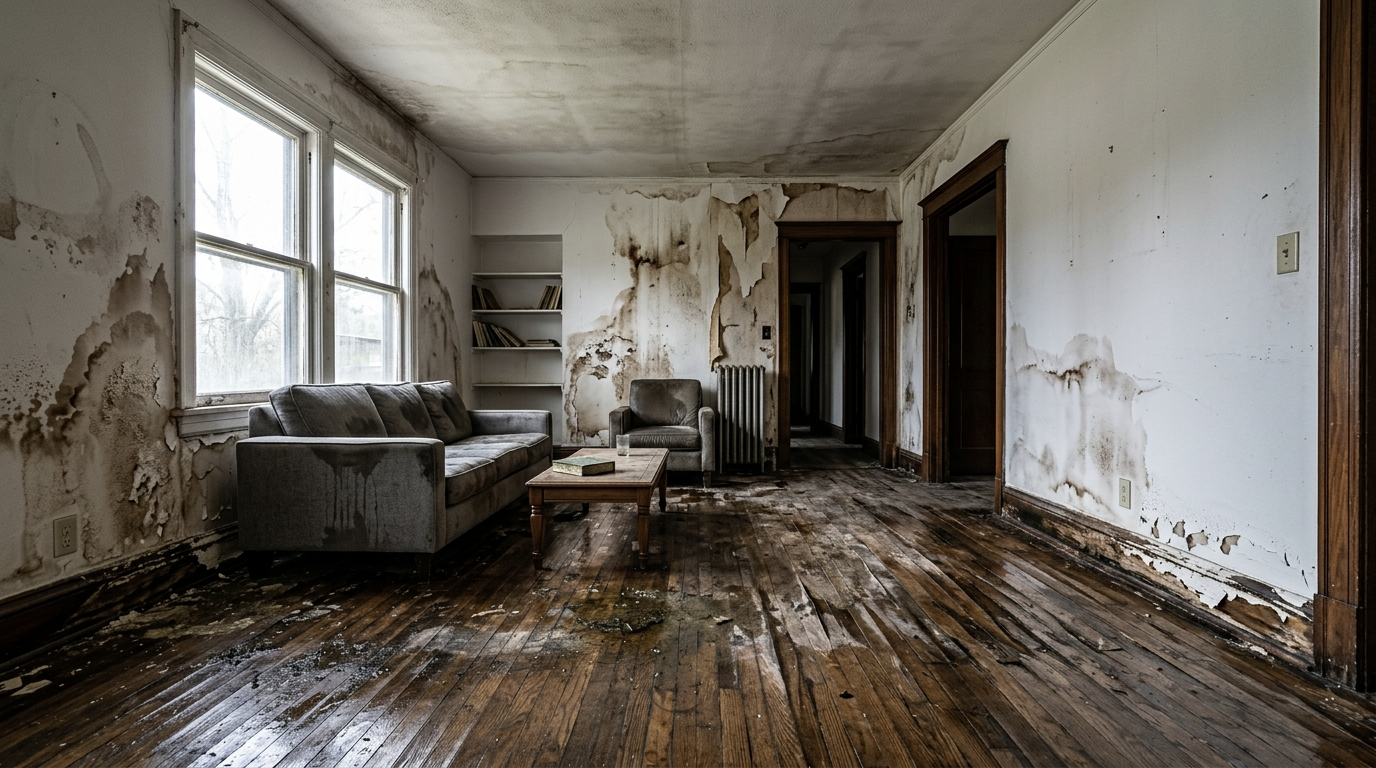
A kitchen fire in a condo creates a specific set of restoration challenges, from smoke migration through shared walls to strict HOA timelines. Unlike a single-family home, one unit’s fire is often the whole building’s problem within hours. Condo and kitchen fire damage restoration in Charlotte is the process of stabilizing, cleaning, and rebuilding a fire-affected unit while coordinating between the HOA’s master policy and the owner’s individual policy. This page explains what the cleanup actually involves and how to make decisions that protect your unit and your claim.
Key Takeaways
- Smoke and soot from a kitchen fire can corrode metal surfaces and etch glass within 72 hours if not neutralized.
- Condo fire restoration often requires coordination with the HOA’s master policy, which typically covers structural elements while your policy covers interior finishes.
- A professional restoration crew should arrive within 30 to 90 minutes for emergency board-up and water extraction after fire suppression.
Why condo fire restoration follows a strict sequence
The response has an order to it, and skipping steps costs you later. First comes emergency stabilization: boarding broken windows or doors, tarping any roof damage, and shutting off power to affected circuits. Next is water extraction, because sprinkler discharge or hose water from the fire department often does more short-term damage than the fire itself. Soot removal follows once the space is dry enough to work in safely, and structural drying runs alongside or right after that to keep moisture from settling into framing and subfloor.
Condos complicate all of this. Shared ventilation systems can pull smoke into hallways and adjoining units within minutes, and firewall penetrations, the gaps around pipes and ductwork that run between units, are a common path for odor to travel where you can’t see it. A restoration crew should hang containment barriers and run negative air pressure machines to keep soot and smoke particles from spreading while work is underway.
Why grease fire residue is harder to remove than synthetic soot
Not all soot is the same, and treating it like it is leads to bad results. Cooking fires, especially grease or protein fires, leave a residue that’s thin, greasy, and almost invisible on painted walls and cabinets. Fires that reach cabinetry, countertops, or plastics produce a heavier synthetic soot that’s dry, black, and easier to see and wipe.
Protein residue is the tricky one. It’s highly acidic and bonds to painted surfaces fast, and because it’s barely visible, it often gets missed or under-cleaned. Left alone, that residue keeps reacting with surfaces over time. Using the wrong cleaning agent, or applying heat before the residue is neutralized, can set the odor permanently into porous materials like drywall and cabinet wood, which turns a deodorization job into a demolition job.
How HOA master policies and individual condo policies split fire coverage
Coverage on a condo fire splits into two policies, and knowing which one pays for what matters before you start making calls.
| Policy | Typically covers |
|---|---|
| HOA master policy | Drywall, subfloor, load-bearing walls, shared systems like ductwork |
| Individual condo policy | Cabinets, appliances, flooring finishes, personal property inside the unit |
On average, the deductible for a condo fire damage claim in Charlotte falls between $1,000 and $2,500.
Before anything gets touched, the fire scene should be documented. That means photos and video of every damaged surface, appliance, and piece of furniture, plus close-ups of soot patterns that show how far smoke traveled. A restoration company should capture this before demolition starts, because it’s the evidence your adjuster and the HOA’s adjuster will both reference. Having one point of contact who talks to both adjusters directly cuts down the back-and-forth that otherwise stalls a claim for weeks.
Why the first 48 hours determine whether materials can be saved
Every phase has a rough window, and knowing them helps you set expectations with your HOA and your insurer. Emergency response and water extraction happen in the first day. Structural drying typically runs 3 to 5 days depending on how much water was involved and how porous the affected materials are. Demolition of unsalvageable materials and reconstruction follow once drying is confirmed complete, and that phase varies the most based on scope.
The first 24 to 48 hours decide more than people realize. Cabinets, drywall, and subfloor that stay wet past that window are far more likely to need full replacement instead of drying and treatment. For a standard condo kitchen fire, full restoration typically takes two to four weeks for a minor fire, six to eight weeks for a moderate fire, and three to four months for a severe fire. Secondary mold growth is the real risk if suppression water isn’t fully dried within 3 to 5 days, and mold on top of fire damage turns a straightforward claim into a much bigger one.
Frequently asked questions
Who handles fire damage restoration in Charlotte after a kitchen fire in a condo, and does insurance cover it?
Usually both policies are involved. The HOA’s master policy typically covers structural components like drywall and subfloor, while your personal policy covers cabinets, appliances, and belongings inside the unit. Check your HOA’s governing documents for the exact split, since coverage boundaries vary by association.
Can I stay in my condo during fire and smoke damage restoration, or do I need to relocate?
It depends on the extent of smoke damage, whether utilities are safe to use, and how much demolition is needed. Light kitchen-only damage may allow you to stay elsewhere in the unit. Heavier smoke migration or structural work usually means temporary relocation until air quality and safety are confirmed.
How is smoke odor removed from a neighboring unit after it migrates through shared walls?
Odor that travels through firewall penetrations or shared ventilation needs the same containment and deodorization process as the source unit: sealing the migration path, cleaning affected surfaces, and running air scrubbers. Addressing only the origin unit while ignoring the neighboring space usually means the smell comes back.
What should I do for urgent cleanup in the first hour after a kitchen fire, before the restoration team arrives?
Once the fire department confirms it’s safe, avoid touching soot-covered surfaces since oils from your hands can set residue further into the material. Don’t run fans or HVAC, which spreads soot particles. Photograph everything, and shut off power to any circuits near water intrusion.
Does fire damage remediation include replacing kitchen cabinets and countertops, or only cleaning them?
Whether Statewide Restoration cleans and restores a kitchen’s cabinets and countertops or replaces them depends on the extent of the damage. Cabinets and countertops can typically be cleaned and restored rather than replaced when they weren’t burned or charred and are made of non-porous or sealed materials, such as solid wood, laminate, or stone with no scorching, that can be fully deodorized. Before choosing this route, testing is done to confirm that soot and odor can be completely removed without leaving discoloration or warping behind. Replacement becomes necessary when there’s charring, heat warping, a cracked finish, or porous, water-damaged material, or when smoke odor has soaked in so deeply that cleaning can’t neutralize it. Following IICRC guidance, Statewide Restoration replaces materials whenever restoration can’t achieve both full function and a verified odor-free result.
What to check before you sign off on the claim
Ask for the moisture readings before any drying equipment gets pulled out, not after. That single document is often the difference between a claim that holds up and one that gets challenged later over hidden mold. If you’re weighing whether cabinets need replacing versus cleaning, get that assessment in writing tied to a specific moisture percentage, not a verbal opinion. Statewide Restoration can walk through that documentation and coordinate directly with your adjuster and the HOA’s adjuster if you want a second set of eyes before you finalize anything.