What actually happens after a pipe burst, flood, or storm hits your Gastonia home or business comes down to what you do in the first 24 hours. Water damage restoration is the process of extracting water, drying and monitoring affected structural materials, and repairing or rebuilding what was damaged to return a property to its pre-loss condition. Before any crew arrives, your actions often determine whether you’re dealing with a straightforward drying job or a much bigger mold and reconstruction problem a week later. Knowing the basics now means you won’t be figuring it out for the first time while water spreads across your floor.
Key Takeaways
- Water left standing for more than 24 to 48 hours creates conditions for mold growth to begin.
- Category 2 or 3 water contamination (gray or black water) requires different handling than clean water losses.
- A rapid response within 30 to 90 minutes of an emergency call significantly limits how far water spreads into drywall, subfloor, and framing.
Why the first 24 hours determine the scope of the damage
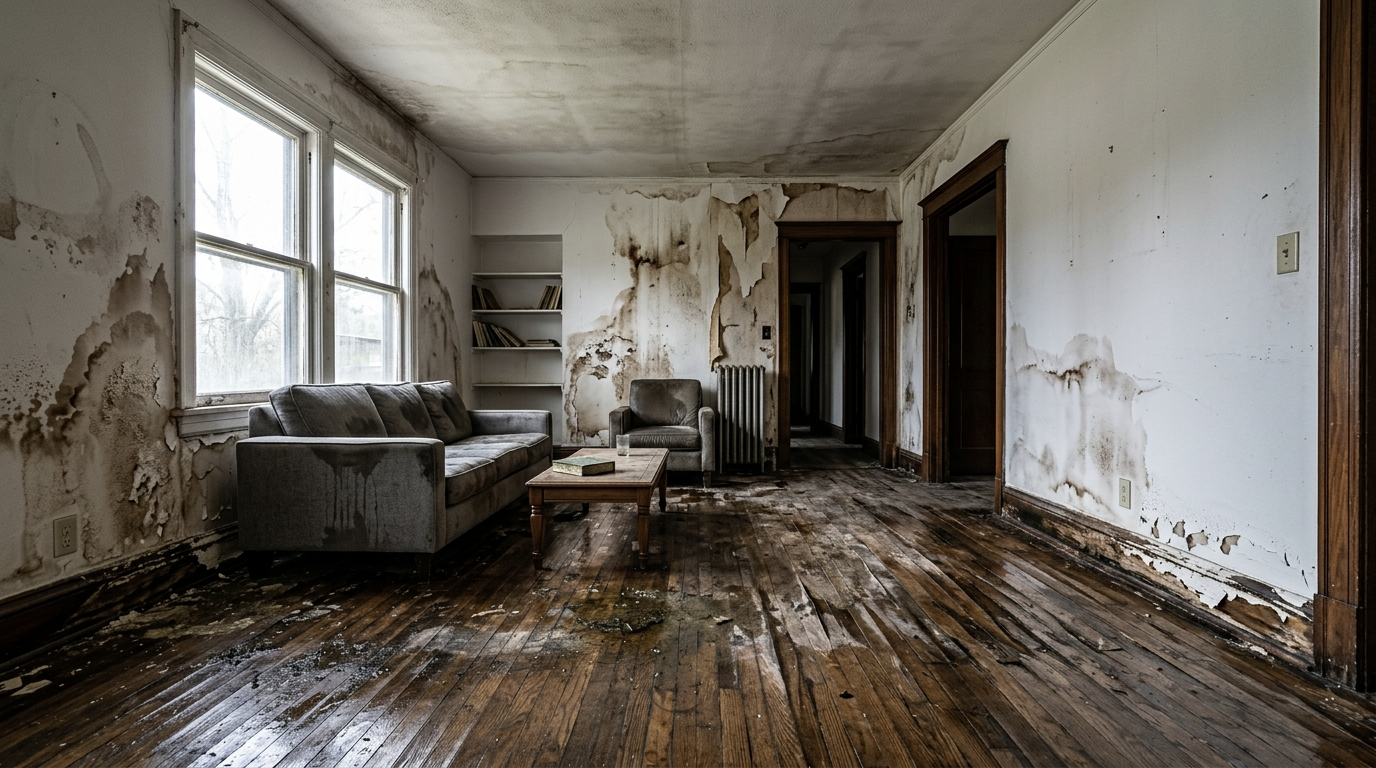
Stop the source first, not the mess. If it’s a burst pipe, find the main shutoff valve and turn it off. If water is near outlets, switches, or a panel, cut power to that area at the breaker rather than risk it, and don’t wade into standing water until you’ve confirmed it’s safe. Getting standing water out fast matters more than how the room looks. Mold can begin colonizing damp materials within 24 to 48 hours, which is why extraction speed matters more than cosmetic cleanup in the first hours.
While you wait for help, take photos and videos of everything: water lines on walls, soaked furniture, visible damage, and note the time you discovered it. That timestamped record is exactly what an adjuster and a restoration technician need to reconstruct what happened and how fast it progressed.
How water categories and classes determine the cleanup approach
Not all water damage is handled the same way, and this is where a lot of DIY cleanup goes wrong. Category 1 is clean water from a supply line or fresh pipe break. Category 2 is gray water with some contamination, like an overflowing washing machine. Category 3 is black water, sewage backups or floodwater, and it carries real health risk, requiring different PPE and often full disposal of anything porous it touched.
IICRC standards define water damage by both contamination category and moisture class, which determines the drying and removal approach a technician should use. Class 1 through 4 describes how deep the moisture has traveled into materials, from a small wet area up to saturated structural framing. A Category 3 loss usually means carpet pad, drywall, and insulation get removed rather than dried in place, because contaminated porous material can’t be sanitized to a safe standard. Misjudging the category is how homeowners end up with a technically dry house that still isn’t safe to occupy.
What the water damage restoration process involves from extraction to drying
Extraction comes first, pulling out standing water with pumps and truck-mounted vacuums. Next is moisture mapping, where a technician uses meters to find exactly how far water traveled into walls, subfloor, and framing, since carpet and drywall can look fine while the material underneath is still holding water. Air movers and dehumidifiers go in based on those readings, not guesswork, and equipment stays in place until moisture meters confirm the structure is back to normal, not until the surface looks dry.
A typical structural drying job runs three to five days, though high humidity, dense materials like hardwood or plaster, and how long the water sat before extraction can all extend that timeline. Mold remediation is a separate phase from water mitigation when contamination has already taken hold, and treating the two as one step is a common misstep that leaves spores behind after the structure is technically dry.
What storm and flood damage restoration means for your insurance claim
Most homeowners and commercial property policies cover sudden, accidental water damage, like a pipe that bursts without warning, but they typically exclude gradual leaks from neglect, and flood damage from rising water or heavy rainfall usually falls under a separate flood policy entirely. An adjuster’s initial estimate is often based on what’s visible, so once walls are opened and hidden moisture or framing damage turns up, the actual scope frequently grows beyond that first number.
Moisture logs, dated photos, and an itemized scope of work are what turn a disputed estimate into an approved one. Direct coordination between the restoration company and the insurance adjuster is standard practice among IICRC-certified restoration firms to align the approved scope of work with the actual drying and repair needs, and it’s often the difference between a claim that closes cleanly and one that drags on for weeks over disagreements about what was actually necessary. For calls in Gastonia, our average emergency response time runs between 60 and 90 minutes.
Frequently asked questions
How do I know if a burst pipe or flood has reached the framing behind my walls?
You can’t tell by looking. Drywall and baseboards can appear completely dry while the framing behind them is saturated. A moisture meter is the only reliable way to know, which is why technicians map moisture readings before deciding what gets dried in place versus removed.
Will my insurance cover a flooded basement caused by heavy rain?
Usually not under a standard homeowners policy. Rainfall-driven flooding is typically excluded and falls under a separate flood insurance policy, while a sudden pipe burst or appliance failure is generally covered. Check your specific policy language, since coverage varies by carrier and endorsement.
How long does water damage mitigation take for an office after a burst pipe?
Drying out a commercial office space after a pipe burst typically takes between three and seven days, depending on the extent of the damage.
Is it safe to stay on the property while drying equipment is running?
In most cases, yes, though air movers and dehumidifiers run loud and around the clock, and rooms with contaminated water or active mold removal may need to be sealed off until that work is complete. Anyone with respiratory sensitivities should ask specifically about their situation.
What’s the difference between water mitigation and full water damage restoration?
Mitigation is the emergency phase: extracting water, drying structures, and stopping damage from spreading further. Restoration is what comes after, repairing or rebuilding what was removed, like drywall, flooring, or trim, to bring the property back to its condition before the loss.
What to check before water sits another hour
If you’re standing in a wet basement or a flooded office right now, the two things worth confirming immediately are whether the water source is fully stopped and whether it’s safe to have power on in that area. Everything else, drying time, insurance scope, mold risk, gets easier to manage once those two things are handled. For emergency water extraction, structural drying, or mold remediation in Gastonia, Statewide Restoration Inc can be reached directly to start that process.