A clear guide to commercial water, storm, and mold restoration in Charlotte, covering response timelines, mitigation steps, and what separates a proper commercial restoration from a residential cleanup. Commercial restoration is the process of mitigating water, storm, or mold damage at a business property using equipment, containment, and documentation standards scaled for occupied commercial buildings rather than homes. If you’re a business owner facing standing water or storm intrusion, the decisions you make in the first few hours matter more than almost anything that comes after.
Key Takeaways
- Commercial water damage requires mitigation within 24 to 48 hours to prevent mold colonization.
- IICRC-certified technicians follow a documented standard for commercial water restoration that differs from residential protocols.
- A 30 to 90 minute emergency response window is the benchmark for limiting business interruption in Charlotte.
Why commercial water restoration follows different standards than residential cleanup
Commercial water restoration is not a bigger version of a residential cleanup. It’s a different job entirely. Equipment has to be sized for open floor plans, warehouse ceiling heights, and HVAC systems that circulate air through an entire building rather than a few rooms. Containment matters more because a commercial loss often sits next to inventory, server rooms, or occupied office space that can’t be isolated from the rest of the building. Documentation carries more weight too, since claims tend to be larger and adjusters expect a paper trail that holds up.
The IICRC S500 is the industry standard for professional water damage restoration, defining four categories of water loss and classes of water intrusion that dictate equipment and drying time. That standard tells a technician how many air movers a space needs, how to map moisture through walls and subfloor, and how long a drying chamber has to run before it’s safe to close out. A certified technician isn’t guessing at any of this. They’re building a drying plan around what’s actually protecting your inventory, electronics, and the structural materials holding the building together.
Why a 30 to 90 minute response window limits business interruption
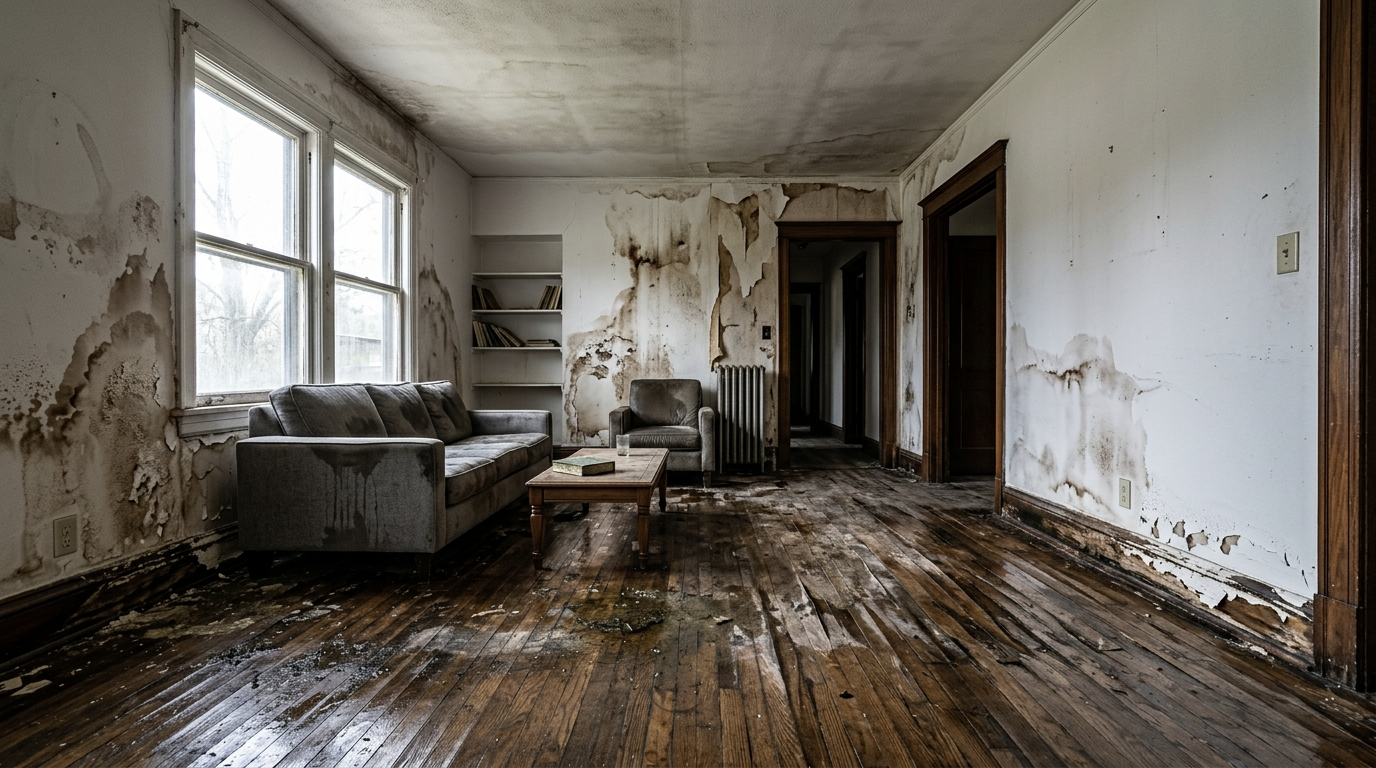
For a Charlotte business owner staring at a burst pipe or storm water coming through a roof line, a 30 to 90 minute response window is the difference between a contained problem and a much bigger one. Standing water in a commercial space can begin affecting drywall, flooring, and electrical systems within hours. Every hour it sits, the scope grows: carpet and pad that could’ve been dried now need replacing, drywall wicks moisture higher up the wall, and the clock on mold colonization starts ticking.
On average, our crews arrive on-site for a commercial emergency call in Charlotte within 60 minutes.
There’s also a practical reason local matters here. A regional or national provider dispatching a crew from outside the Charlotte metro works against drive time before they’ve even started. A team already based in the area doesn’t have that problem, and in a commercial loss, the hours saved on arrival often translate directly into square footage saved on the drying side.
How direct insurance coordination speeds up a commercial claim
A commercial water or storm claim generates a lot of paperwork, and most business owners have never had to produce it before. An adjuster expects to see the following before approving payment:
- Photo documentation of the loss
- Moisture logs tracking drying progress day by day
- A written scope of loss report
When a restoration provider communicates directly with the adjuster instead of routing everything through the business owner, that documentation moves faster and there’s less room for a claim to stall on missing information.
This matters more for commercial claims than residential ones, because commercial losses tend to involve higher dollar amounts, multiple building systems, and sometimes business interruption coverage that requires its own set of records. A business owner dealing with a closure already has enough on their plate without chasing down claim status calls. Having a provider who handles the reporting side directly means the owner’s time goes toward keeping the business running, not toward paperwork.
What to verify before hiring a commercial restoration provider in Charlotte
Before hiring anyone for a commercial loss, verify three things: IICRC certification, actual commercial project experience, and genuine 24/7 availability, not an answering service that calls back the next morning. Residential experience alone doesn’t prepare a crew for a multi-thousand-square-foot commercial floor plan, and a company’s marketing claims about availability are worth less than a straight answer to “who answers the phone at 2 a.m.”
Statewide Restoration Inc is a locally owned and operated Charlotte company with IICRC-certified technicians and a 24/7 rapid response team. Scale is the other thing to check. Ask how much equipment a company keeps on hand and how many crew members they can put on a job at once, because a provider stretched thin on a residential-sized equipment inventory will struggle to dry a warehouse or a multi-floor office building in the timeframe a business needs.
The largest commercial project we’ve restored to date spanned 23,000 square feet.
A locally owned company with commercial experience also tends to offer better accountability after the fact. If a drying job needs a follow-up visit or an adjuster has a question three weeks later, you’re calling the same local office, not a call center.
Frequently asked questions
Who should I call for emergency water damage mitigation at a Charlotte business?
Extraction should begin as soon as a crew arrives on site, ideally within the 30 to 90 minute response window that Charlotte businesses should expect from a local emergency team. The sooner extraction starts, the less water has a chance to spread into flooring, subfloor, and wall systems.
Can commercial mold remediation happen while our office stays open?
Mold remediation in an occupied building requires containment barriers and air filtration to keep spores from spreading to areas still in use, along with careful scheduling around business hours. A certified provider should be able to remediate affected areas without shutting down the entire building.
What documentation will I need for a commercial insurance claim after water or storm damage?
A proper commercial claim file includes photo documentation of the damage, daily moisture logs showing drying progress, and a written scope of loss report that the adjuster can use to approve the claim. That paperwork should be handled as part of the job, not billed as an afterthought.
Will a restoration crew work after hours so a storm damage closure doesn’t disrupt operations longer than necessary?
Yes, commercial restoration work can be scheduled after hours or overnight to keep daily operations running smoothly. This typically involves coordinating closely with the property owner ahead of time, then sending in specialized crews to handle water extraction, drying, cleanup, or repairs during off-peak hours. Throughout the process, we take steps to ensure safety and security while completing the work effectively without interfering with daytime business activities.
What types of commercial properties can a Charlotte restoration team handle, from offices to biohazard incidents?
Statewide Restoration has handled commercial restoration projects across a range of property types in the Charlotte area, including restaurants, warehouses, and offices.
What to check before disaster strikes
Every business with a commercial property should know, before an emergency happens, which restoration providers in their area actually carry IICRC certification and can prove commercial-scale equipment capacity. Ask now who answers your call at 2 a.m., not after a pipe has already burst. If you want to talk through what a rapid response and direct insurance coordination would look like for your property, Statewide Restoration is worth a call.